
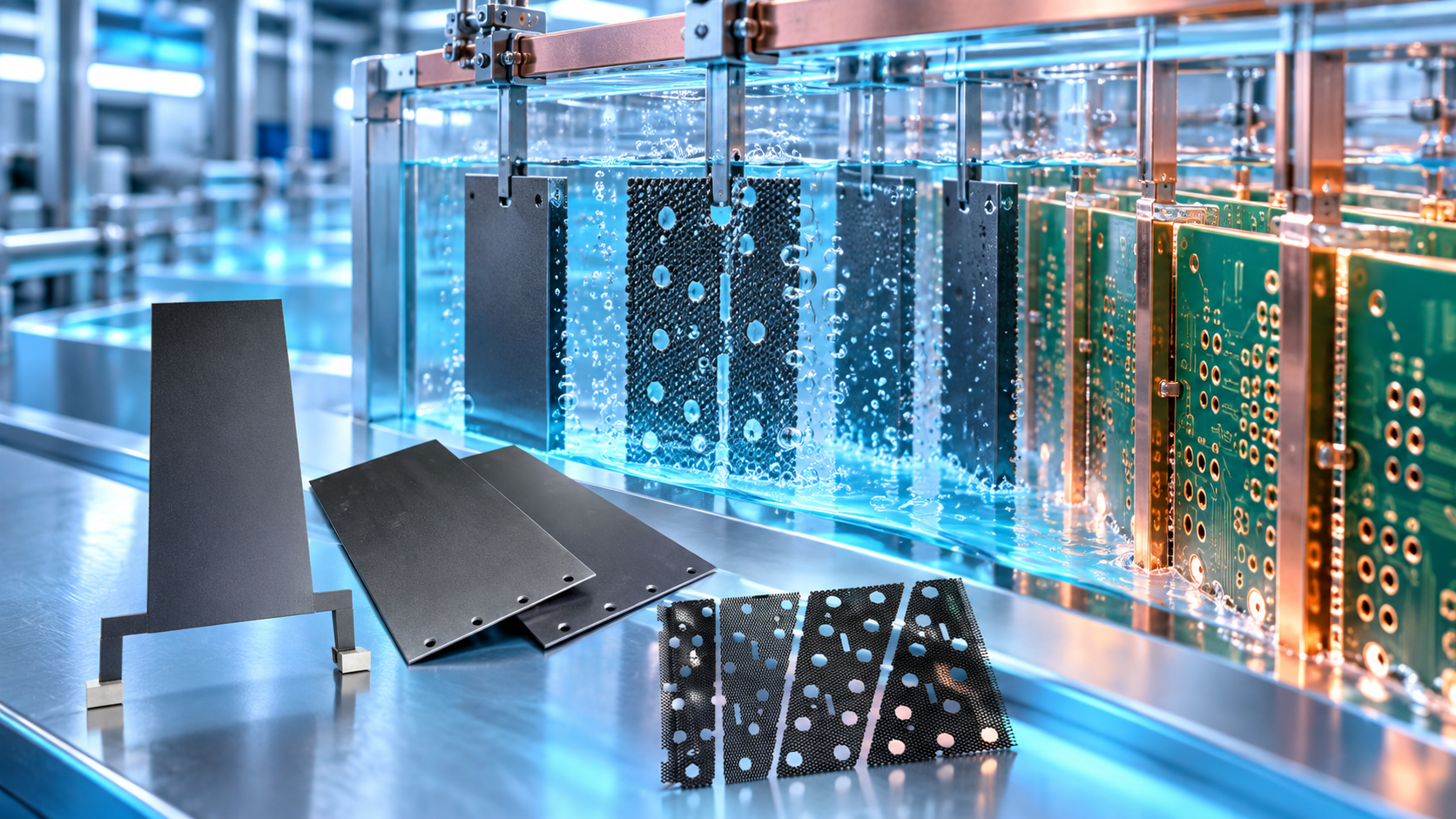
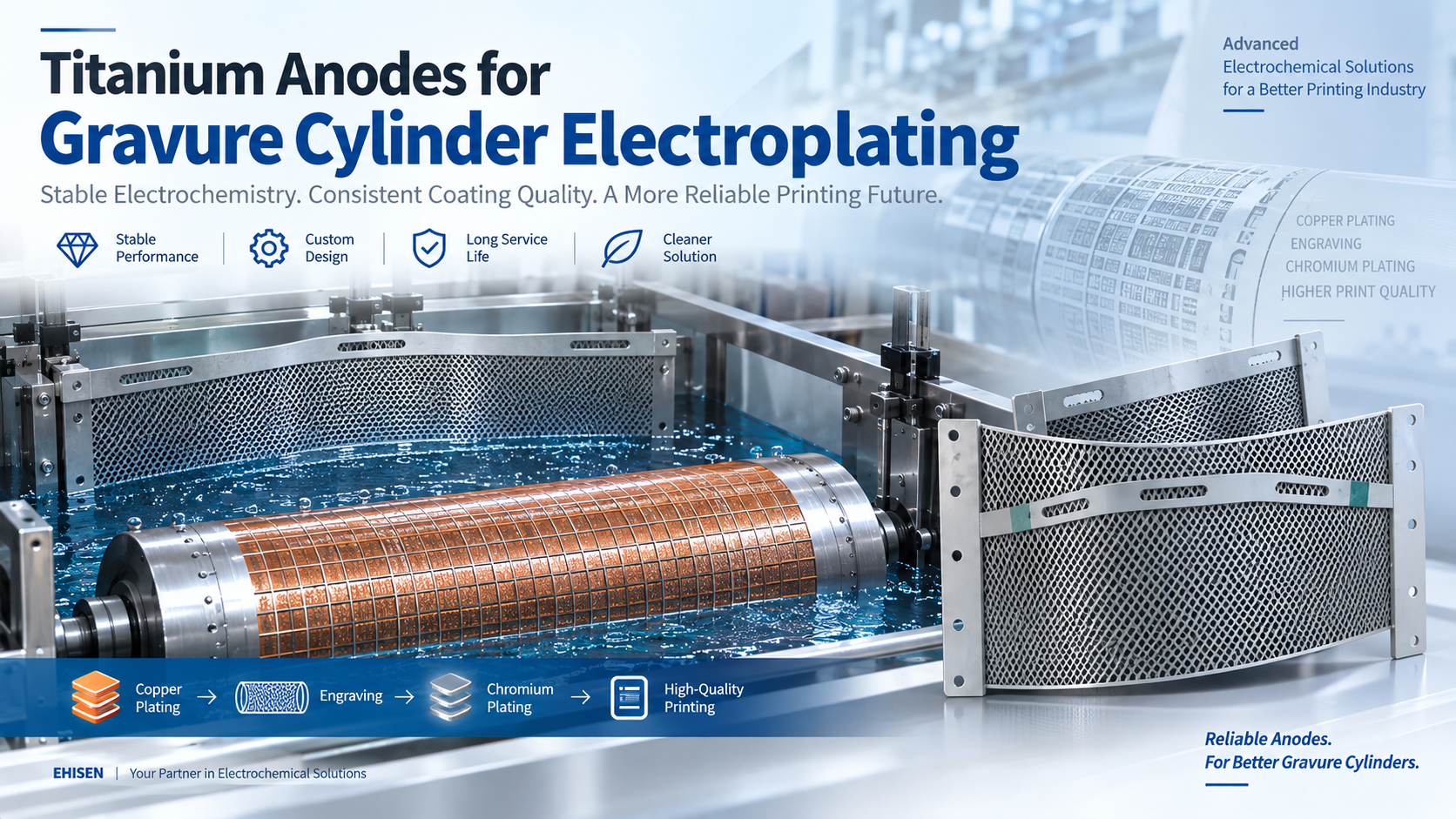
Agricultural electrolyzed water is produced through controlled electrolysis and can be used for irrigation-water sanitation, greenhouse disinfection, hydroponic water treatment, agricultural cleaning, and other microbial-control applications, while MMO titanium anodes form one of the core electrochemical components inside the generation equipment.
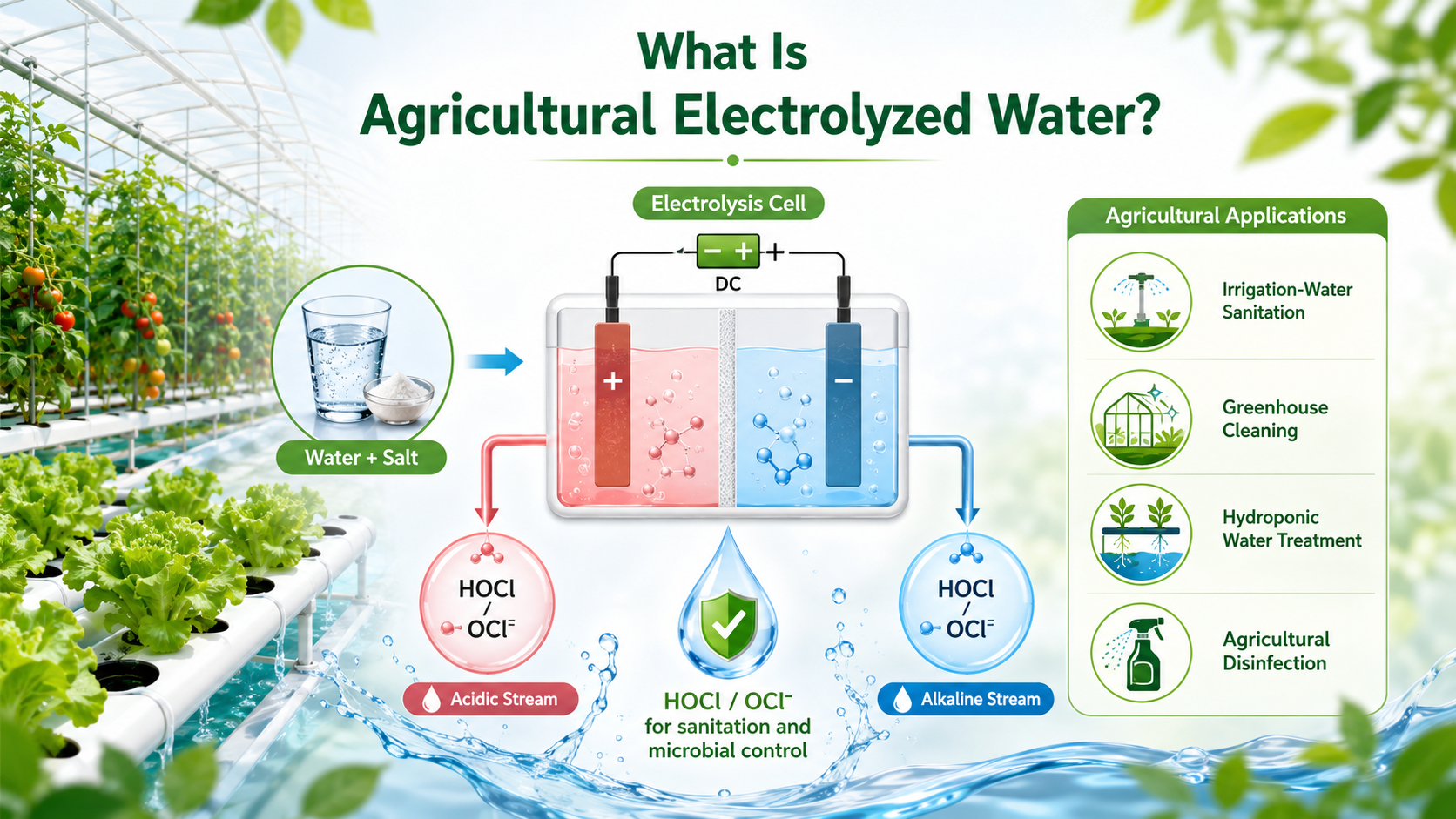
1. What Is Agricultural Electrolyzed Water?
Agricultural electrolyzed water is functional water produced by electrolysis, and its properties vary according to electrolyte composition, pH, electrolysis-cell design, and the active substances generated during the process.
Agricultural electrolyzed water is not one single standardized liquid. In a typical system, water containing an electrolyte such as sodium chloride (NaCl), potassium chloride (KCl), or another suitable salt is introduced into an electrolysis cell. Direct current is then applied between the anode and cathode, causing oxidation and reduction reactions that change the chemical characteristics of the water.
According to pH, electrolysis-cell structure, and the substances generated, agricultural electrolyzed water can broadly include acidic electrolyzed water, alkaline electrolyzed water, neutral or weakly alkaline electrolyzed chlorine solutions, and several other specialized types of electrochemically activated water.
Acidic electrolyzed water is generally associated with the anodic side of a divided electrolysis system and is characterized by relatively strong oxidation capability. Depending on the generator and operating conditions, acidic electrolyzed water may range from strongly acidic to mildly acidic. Hypochlorous acid, or HOCl, is one of the most important antimicrobial species in many chloride-based systems.
Alkaline electrolyzed water is normally generated on the cathodic side. Because water reduction produces hydroxide ions, its pH can be significantly higher than that of the feed water. If potassium chloride is used as the electrolyte, potassium-related alkaline species may also be present in the catholyte.
Another important category is neutral or weakly alkaline electrolyzed chlorine water, including systems designed to produce sodium hypochlorite or potassium hypochlorite solutions. These products are particularly relevant to agricultural water sanitation because they can provide controlled available chlorine while being produced directly from water, salt, and electricity.
For agricultural equipment manufacturers, these classifications are important because different types of electrolyzed water may require different electrolysis-cell structures, operating conditions, power-supply strategies, and electrode designs.
2. How Agricultural Electrolyzed Water Is Produced
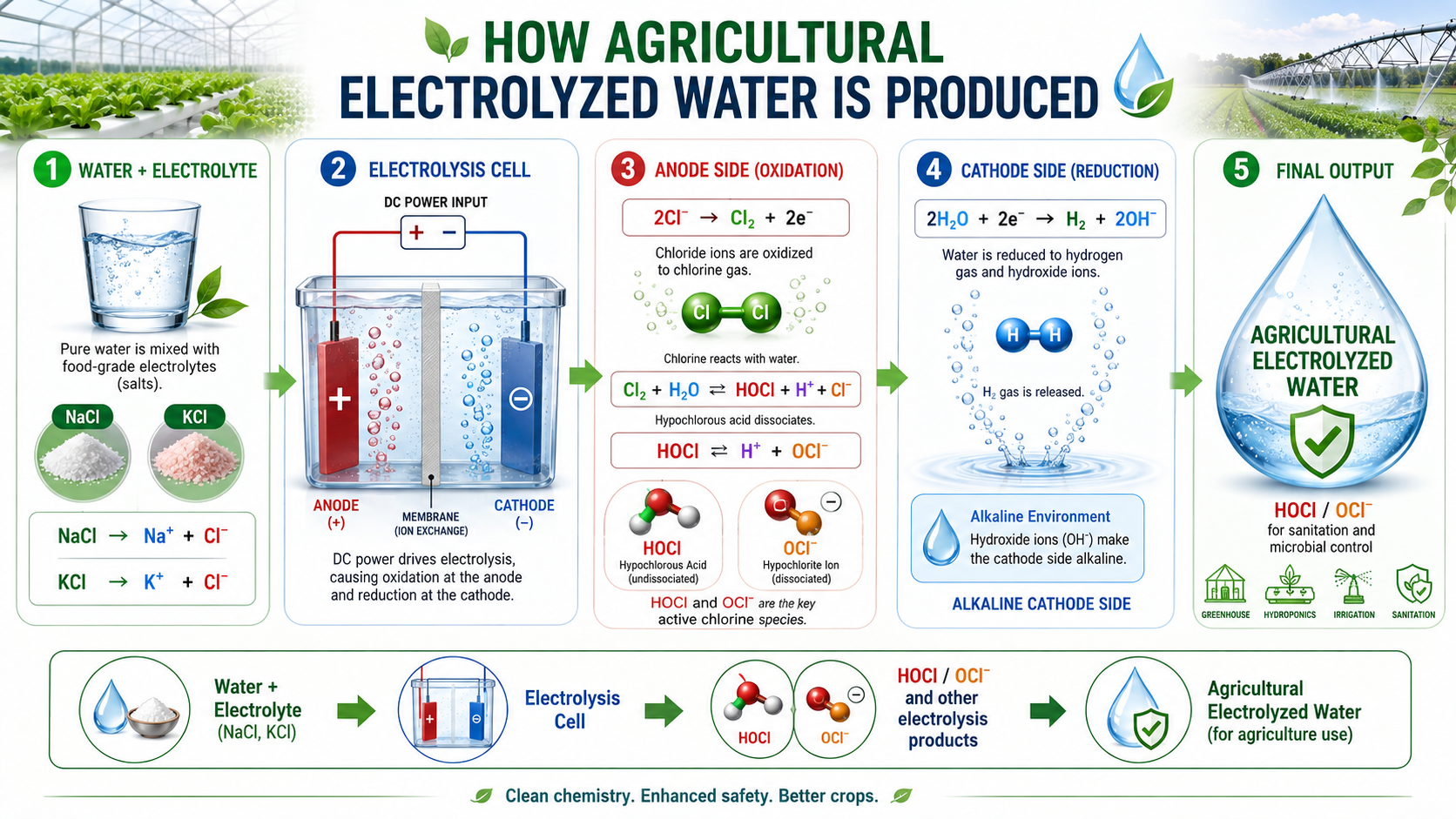
Agricultural electrolyzed water is typically produced by passing direct current through an electrolyte solution, causing chloride oxidation at the anode and water reduction at the cathode.
In agricultural sanitation equipment, chloride-containing salts are frequently used because chloride ions can be electrochemically converted into reactive chlorine species.
Taking sodium chloride or potassium chloride as an example, the salt first dissociates in water:
NaCl → Na⁺ + Cl⁻
or
KCl → K⁺ + Cl⁻
When direct current passes through the electrolysis cell, chloride ions participate in oxidation reactions at the anode:
2Cl⁻ → Cl₂ + 2e⁻
The generated chlorine then reacts with water:
Cl₂ + H₂O ⇌ HOCl + H⁺ + Cl⁻
Hypochlorous acid can further dissociate:
HOCl ⇌ H⁺ + OCl⁻
The relative proportions of HOCl and OCl⁻ depend strongly on pH. This is why two electrolyzed-water generators using similar salts may still produce products with very different disinfection characteristics.
At the cathode, water undergoes reduction:
2H₂O + 2e⁻ → H₂ + 2OH⁻
Hydrogen gas is generated while hydroxide ions accumulate near the cathode, creating an alkaline environment.
If sodium ions dominate the electrolyte, sodium hydroxide-related chemistry develops in the cathodic region. If potassium chloride is used, the corresponding alkaline stream is associated with potassium ions and hydroxide ions.
The entire process can therefore be summarized as:
Water + Electrolyte + DC Power
↓
Electrolysis Cell
↓
Anodic Oxidation + Cathodic Reduction
↓
HOCl / OCl⁻ and Other Electrolysis Products
↓
Agricultural Electrolyzed Water
This electrochemical pathway is the fundamental reason why titanium anodes are directly connected with agricultural electrolyzed-water equipment.
3. Acidic and Alkaline Electrolyzed Water
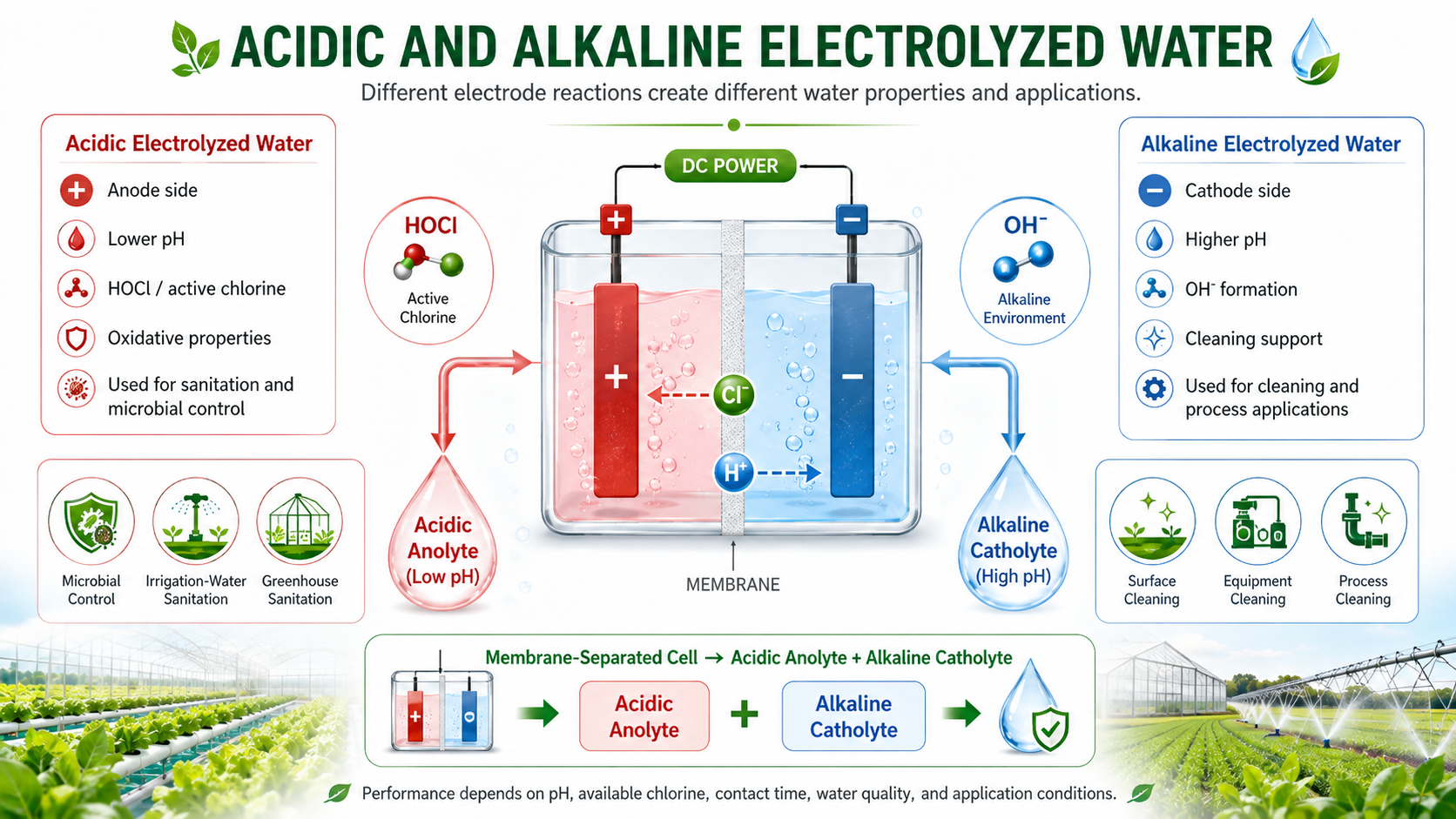
Acidic and alkaline electrolyzed water originate from different electrode reactions and therefore have different chemical properties and potential agricultural applications.
In a membrane-separated electrolysis cell, the anode chamber and cathode chamber are separated so that the two streams can be collected independently.
The anodic stream usually has stronger oxidative properties. In chloride-containing systems, hypochlorous acid and other active chlorine species may be present. These species can damage microbial cell structures, proteins, enzymes, and other essential biological components, which explains why acidic electrolyzed water is mainly studied and applied for sanitation and microbial control.
The relatively low pH and oxidative environment of acidic electrolyzed water are important parts of its antimicrobial behavior. However, disinfection effectiveness does not depend on pH or ORP alone. Available chlorine concentration, organic load, contact time, water temperature, and the target microorganism also influence treatment results.
The cathodic stream is different. The generation of hydroxide ions makes alkaline electrolyzed water suitable for certain cleaning and process applications. Strongly alkaline electrolyzed water can assist with removal of some organic contamination and grease, which is one reason catholyte has attracted attention in equipment and surface-cleaning systems.
Agricultural users sometimes combine the two streams in different stages of a sanitation process. For example, alkaline water may be considered for cleaning, while oxidizing electrolyzed water is used for subsequent microbial control.
However, the appropriate application sequence should be determined according to the specific crop, equipment, water chemistry, and sanitation objective rather than treated as a universal operating rule.
4. Sodium Hypochlorite and Potassium Hypochlorite Electrolyzed Water
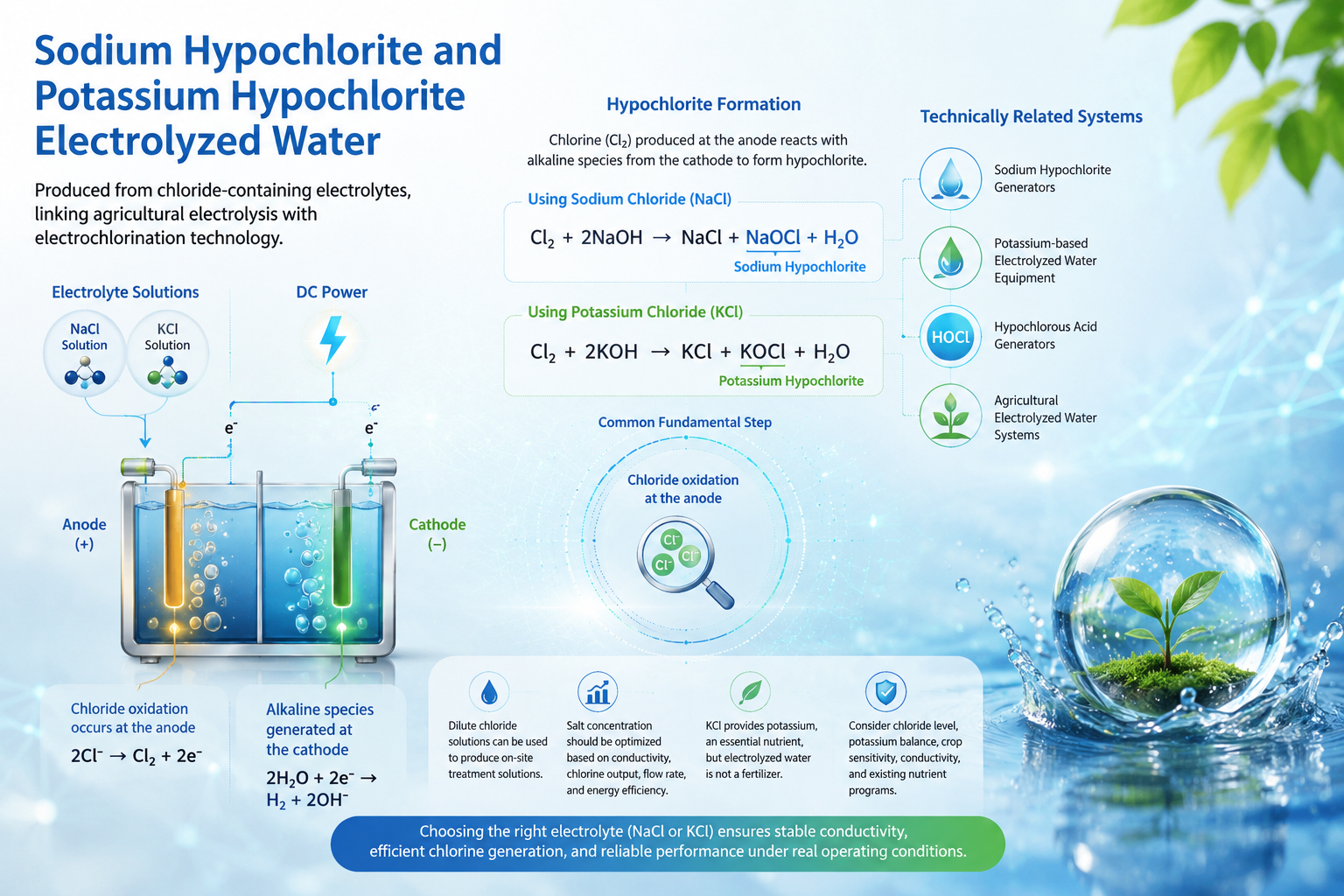
Sodium hypochlorite and potassium hypochlorite electrolyzed water are produced from chloride-containing electrolytes and represent an important connection between agricultural electrolysis and conventional electrochlorination technology.
When NaCl or KCl solutions are electrolyzed, chloride oxidation occurs at the anode while alkaline species are generated at the cathode. In an undivided or appropriately designed electrolysis system, the products of these reactions can interact to form hypochlorite-containing water.
Using sodium chloride as an example, the overall chemistry can lead to the formation of sodium hypochlorite:
Cl₂ + 2NaOH → NaCl + NaOCl + H₂O
A corresponding potassium chloride system can form potassium hypochlorite:
Cl₂ + 2KOH → KCl + KOCl + H₂O
This explains why sodium hypochlorite generators, potassium-based electrolyzed-water equipment, hypochlorous acid generators, and agricultural electrolyzed-water systems are technically related.
They are not necessarily identical machines, but many rely on the same fundamental electrochemical step:
chloride oxidation at the anode.
Some agricultural generator designs use relatively dilute chloride solutions so that the treatment solution can be produced on site at the concentration required for downstream use. The exact salt concentration should be determined according to generator design, conductivity, desired chlorine output, flow rate, and energy efficiency rather than adopting one fixed concentration for every system.
NaCl is widely used because it is readily available and economically practical. KCl is also of interest in some agricultural applications because potassium is an essential plant nutrient.
However, the fact that potassium is beneficial to plants does not mean that KCl-based electrolyzed water can automatically be treated as fertilizer. Chloride concentration, potassium balance, crop sensitivity, conductivity, and existing nutrient programs must all be considered.
For equipment manufacturers, the more important engineering question is whether NaCl or KCl provides the required conductivity and chlorine-generation performance under the planned operating conditions.
5. Agricultural Applications of Electrolyzed Water
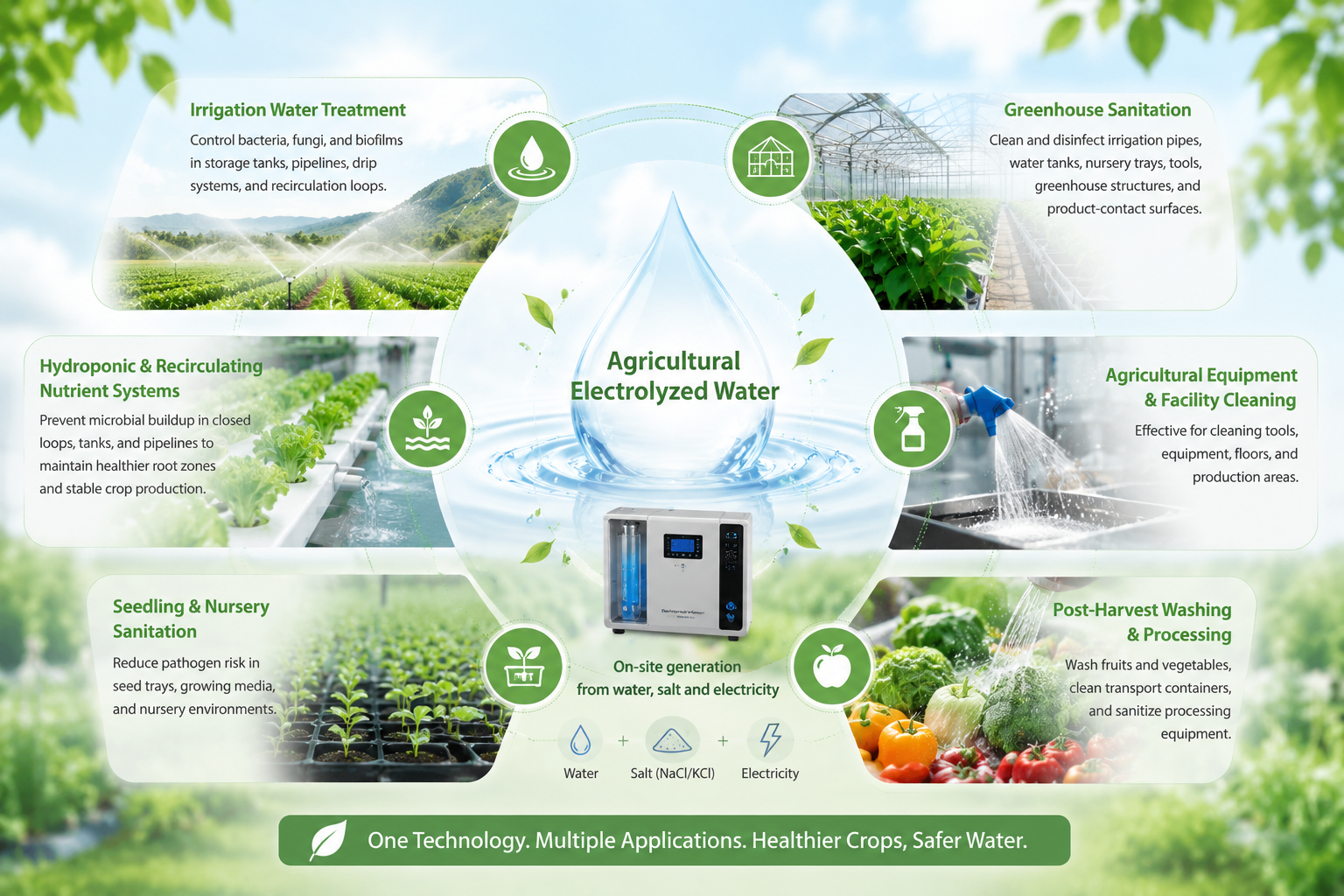
Agricultural electrolyzed water is mainly used where controlled microbial reduction, water sanitation, and on-site disinfectant generation are required.
One of the clearest applications is irrigation-water treatment. Agricultural water may carry bacteria, fungi, biofilms, or other microorganisms through storage tanks, irrigation pipelines, drip systems, and recirculation loops. If contaminated water enters a greenhouse or hydroponic system, microorganisms may spread throughout the production network.
Electrolyzed-water generation allows an agricultural water-treatment system to produce disinfecting water on site from water, salt, and electricity. The generated solution can then be introduced into the irrigation system at a controlled concentration.
Greenhouse sanitation is another important application. Electrolyzed water may be used in cleaning or disinfection programs for irrigation pipes, water tanks, nursery trays, tools, greenhouse structures, and selected product-contact surfaces.
Hydroponic and recirculating nutrient systems are particularly relevant because water may repeatedly pass through the same tanks, pipelines, root zones, and return circuits. Once microorganisms enter such a closed loop, water can become an important transmission pathway. Electrochemical sanitation can therefore become one component of a broader recirculating-water-management system.
Post-harvest agricultural processes also use controlled disinfecting water for washing fruits and vegetables, cleaning transport containers, and sanitizing processing equipment.
The same electrochemical principle may therefore serve many agricultural applications, but the required available chlorine concentration, flow rate, contact time, and water chemistry can vary significantly from one application to another.
6. Safe Use of Acidic Electrolyzed Water on Crops
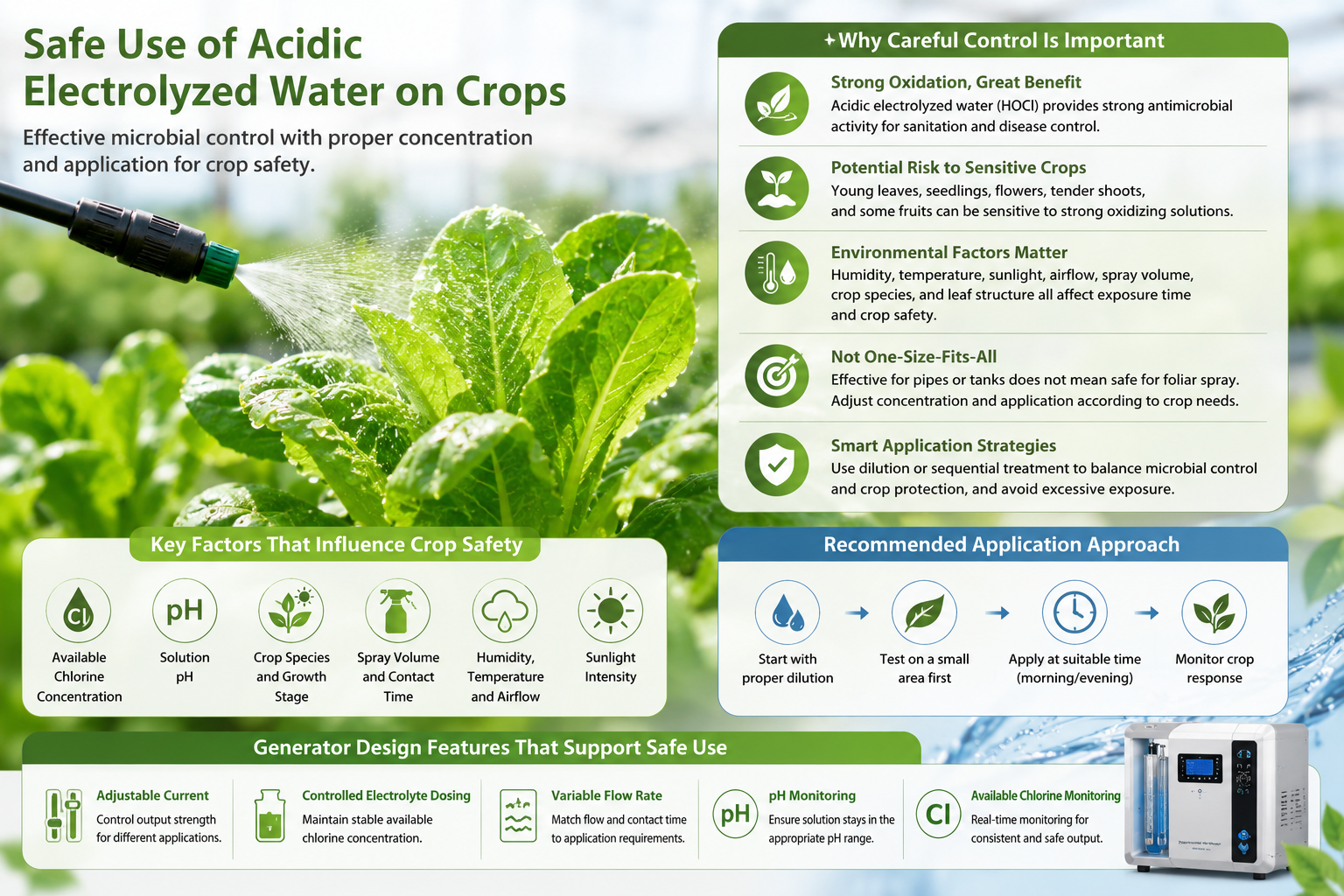
Acidic electrolyzed water can provide strong oxidation and microbial-control capability, but direct contact with plant tissue requires careful control of concentration and exposure conditions.
Sensitive young leaves, seedlings, flowers, tender shoots, and some fruits may be affected if they are exposed to excessively strong oxidizing solutions.
The risk depends not only on available chlorine concentration but also on environmental factors.
Humidity affects how quickly sprayed water evaporates from the plant surface. Under high-humidity conditions, liquid may remain on leaves for longer periods. Temperature, sunlight, airflow, spray volume, crop species, plant age, and leaf structure can also influence the duration and intensity of exposure.
For this reason, direct foliar spraying should be treated differently from irrigation-water or equipment sanitation.
A concentration that works effectively for disinfecting a pipeline may be inappropriate for spraying onto tender seedlings.
Some agricultural practices therefore use dilution or sequential treatment when applying electrolyzed water directly to crops. The objective is to maintain antimicrobial activity while reducing prolonged oxidative exposure to plant tissues.
However, there should not be a universal recommendation that every crop must use the same dilution ratio, available chlorine concentration, or application time. Equipment manufacturers should allow operators to adjust output according to actual crop requirements.
This makes adjustable current, controlled electrolyte dosing, variable flow rate, pH monitoring, and available-chlorine monitoring valuable design features in agricultural electrolyzed-water generators.
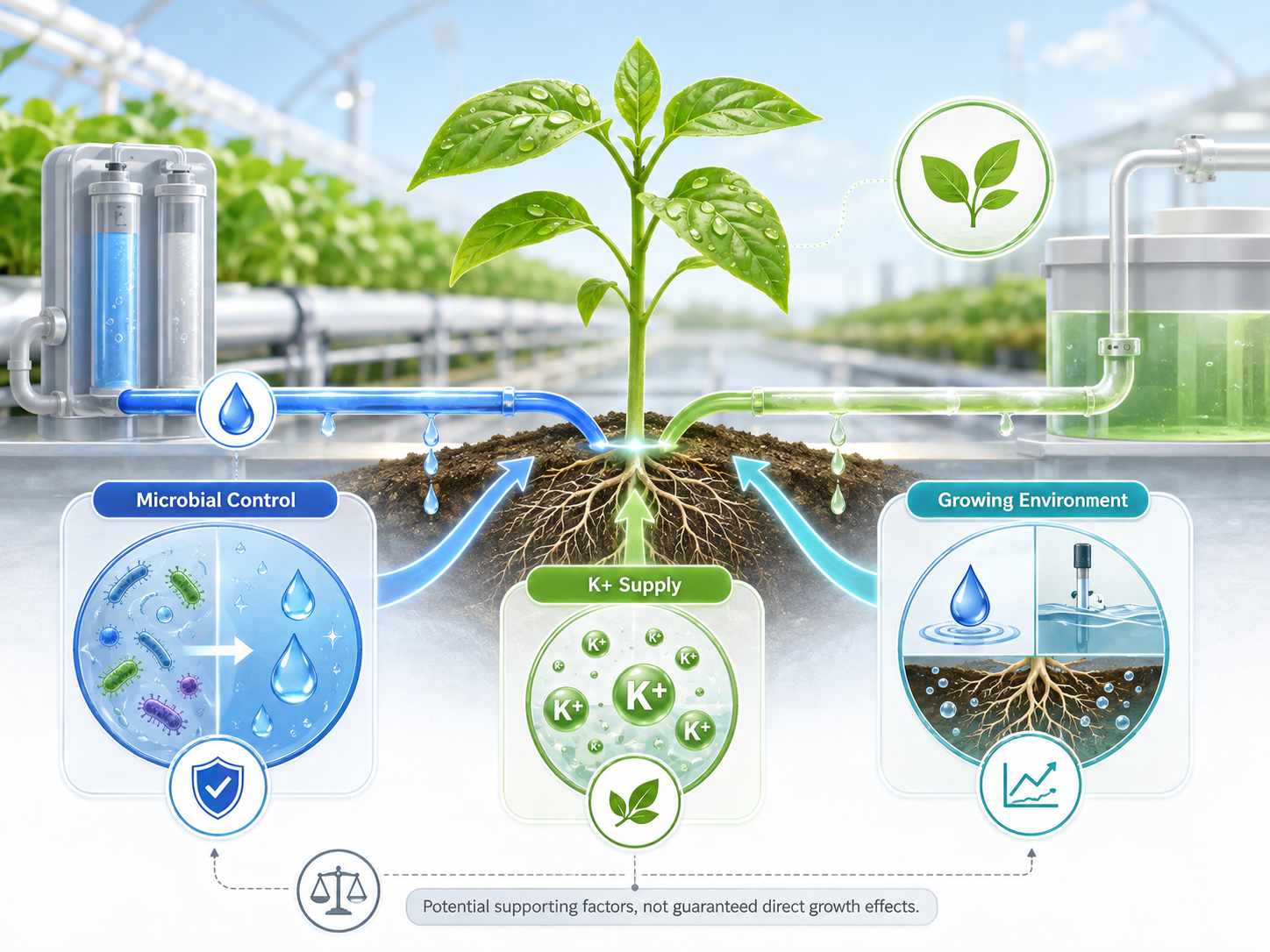
7. Can Electrolyzed Water Promote Plant Growth?
Potential growth-related effects of agricultural electrolyzed water may come from improved microbial control, potassium supply in some KCl-based systems, or changes in the cultivation environment, but these effects should not be presented as universal guarantees.
In potassium-chloride-based electrolysis systems, the cathodic stream contains potassium ions together with an alkaline environment. Because potassium is an essential macronutrient, some agricultural research and applications have explored whether such water could contribute to plant nutrition or crop-quality improvement.
Potassium has well-established roles in plant physiology, including water regulation, enzyme activity, photosynthate transport, and fruit development.
However, alkaline electrolyzed water should not automatically be treated as potassium fertilizer. Its actual effect depends on potassium concentration, chloride level, pH, electrical conductivity, crop type, root-zone conditions, fertilizer formulation, and application frequency.
Another important pathway may be indirect.
If electrolyzed water helps control harmful microorganisms in irrigation water, hydroponic circulation systems, or the root-zone environment, plants may experience lower disease pressure. Improved plant development under these conditions could therefore partly result from healthier growing conditions rather than from direct stimulation by the electrolyzed water itself.
Claims relating to significantly higher yield, sugar content, germination, hormone regulation, or accelerated growth should be supported by crop-specific data before being used as equipment-performance claims.
For agricultural equipment manufacturers, water sanitation and microbial control should remain the primary and most defensible value proposition, while plant-growth effects can be treated as an application-specific research direction.
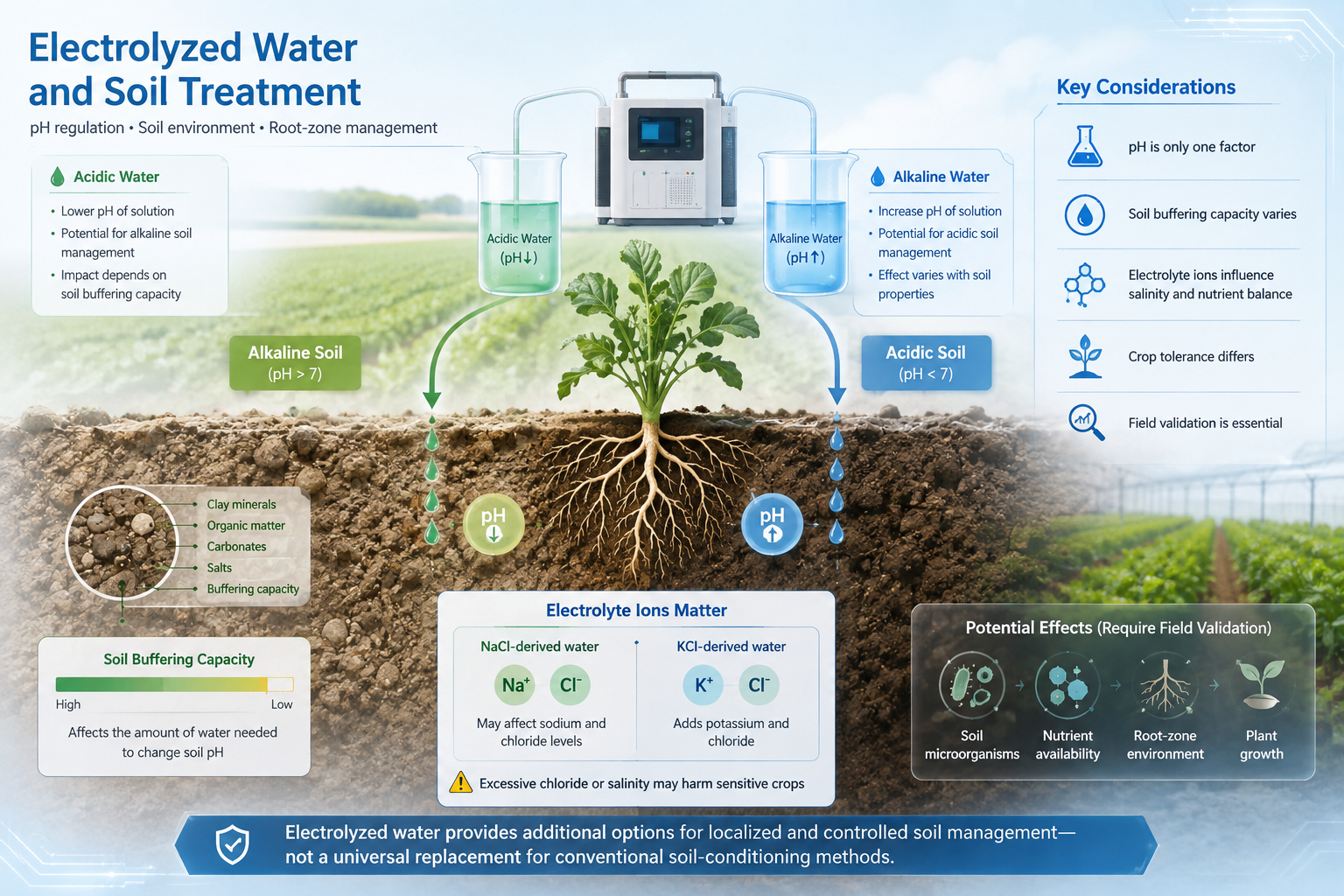
8. Electrolyzed Water and Soil Treatment
Acidic and alkaline electrolyzed water can influence the chemical environment of soil, but soil conditioning requires consideration of buffering capacity, salinity, electrolyte ions, and crop tolerance.
Because acidic and alkaline electrolyzed water have different pH values, they have attracted interest in soil-pH management.
In theory, acidic electrolyzed water can reduce the pH of the solution entering alkaline soil, while alkaline catholyte can raise the pH of an acidic solution.
However, agricultural soil is much more complex than water in a tank.
Soils contain clay minerals, organic matter, carbonates, salts, and other buffering components. As a result, the amount of acidic or alkaline water required to create a meaningful long-term soil-pH change can vary significantly.
The electrolyte itself also matters.
Repeated application of NaCl-derived electrolyzed water may influence sodium and chloride levels. KCl-derived water introduces potassium as well as chloride. Excessive chloride accumulation or increasing soil salinity can negatively affect sensitive crops.
Therefore, electrolyzed water should not be described as a universal replacement for conventional soil-conditioning methods.
A more technically accurate position is that electrochemically generated water may provide additional options for localized or controlled soil and root-zone management when its chemistry is carefully evaluated.
Its potential effect on soil microorganisms, nutrient availability, and plant growth should also be validated under actual agricultural conditions rather than assumed solely from pH or ORP values.
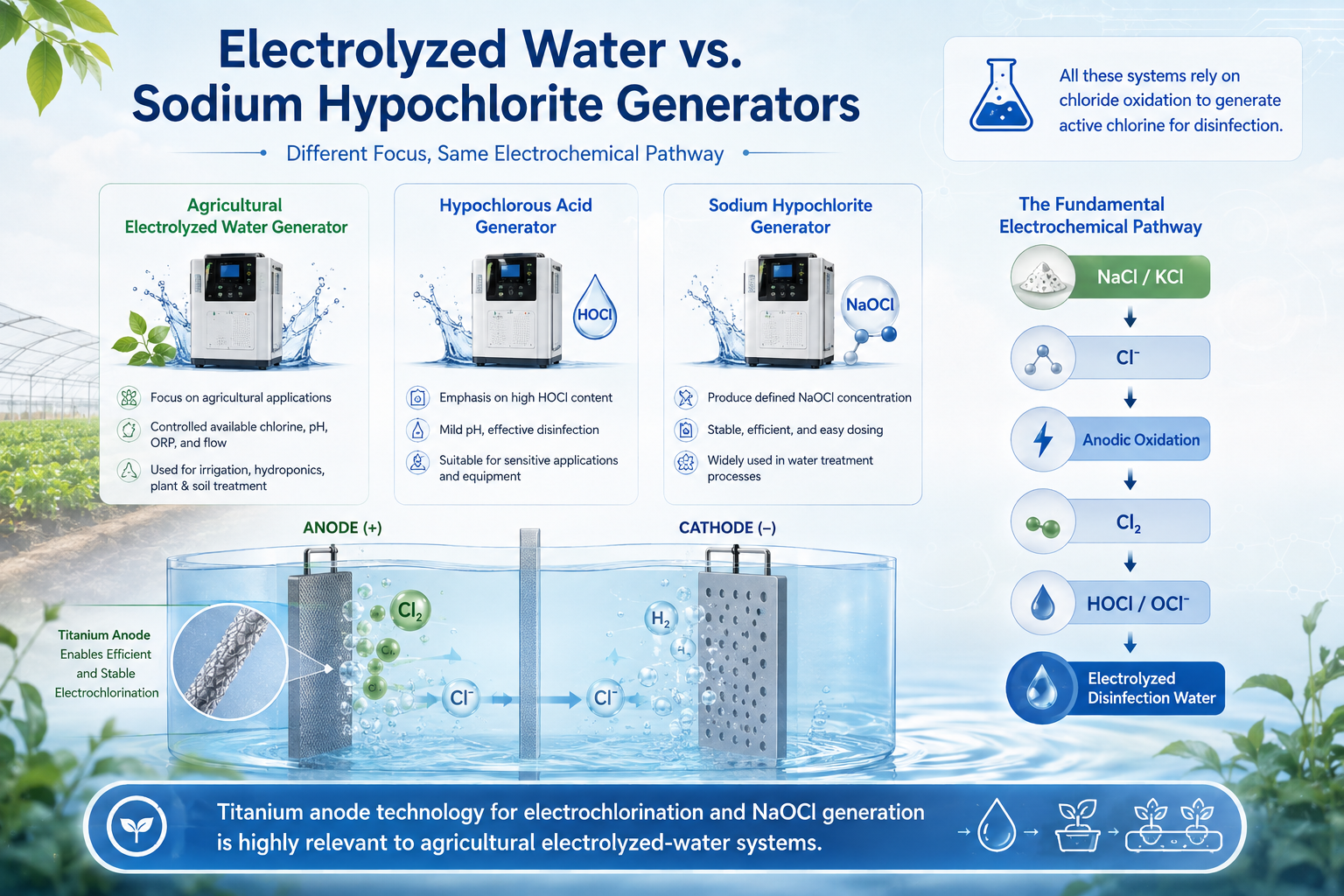
9. Electrolyzed Water vs. Sodium Hypochlorite Generators
Agricultural electrolyzed-water generators, hypochlorous acid generators, and sodium hypochlorite generators are closely related electrochemical systems because they commonly rely on chloride oxidation to generate active chlorine.
This relationship is particularly important for equipment manufacturers and titanium-anode buyers.
A sodium hypochlorite generator is generally designed to produce a defined concentration of NaOCl solution for subsequent dosing into a water-treatment process.
A hypochlorous acid generator places greater emphasis on producing a solution in which HOCl is an important active chlorine species.
An agricultural electrolyzed-water generator may focus on producing treatment water with a controlled combination of available chlorine, pH, ORP, and flow for a particular agricultural process.
Their final products and operating conditions may differ, but the fundamental electrochemical pathway remains closely related:
NaCl / KCl
↓
Cl⁻
↓
Anodic Oxidation
↓
Cl₂
↓
HOCl / OCl⁻
↓
Electrolyzed Disinfection Water
This is the key reason why titanium-anode technology developed for electrochlorination and sodium hypochlorite generation is also highly relevant to agricultural electrolyzed-water systems.
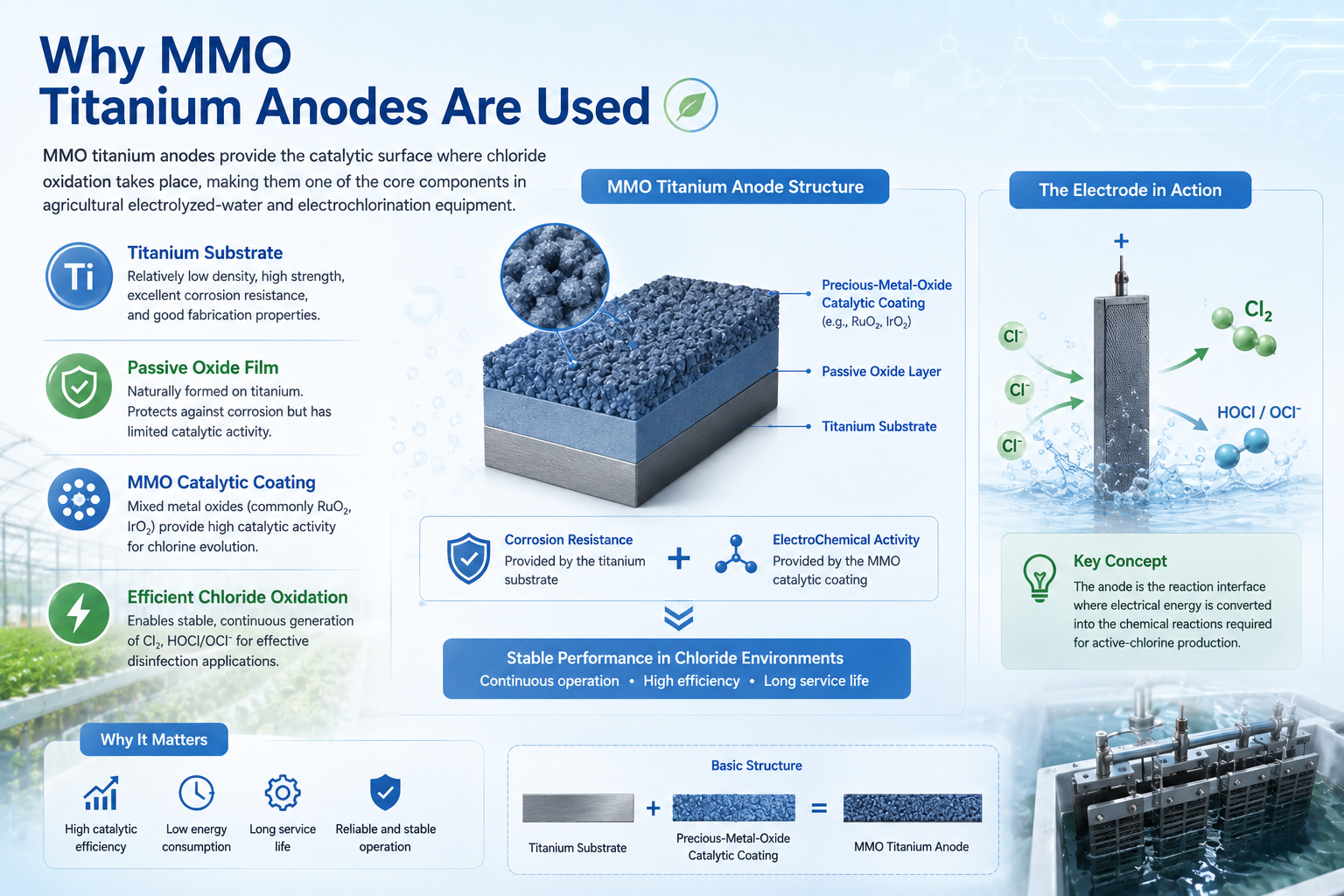
10. Why MMO Titanium Anodes Are Used
MMO titanium anodes provide the catalytic surface where chloride oxidation takes place, making them one of the core components inside agricultural electrolyzed-water and electrochlorination equipment.
A commercial electrolyzer requires a stable anode capable of operating continuously in a chloride-containing electrochemical environment.
Titanium is widely selected as the substrate because it combines relatively low density, mechanical strength, corrosion resistance, and good fabrication characteristics.
However, corrosion resistance alone does not make bare titanium an ideal chlorine-generation anode.
Titanium naturally forms a passive oxide film. This protective layer helps resist corrosion but also limits its usefulness as a highly active catalytic surface.
For this reason, the titanium substrate is coated with an electrochemically active mixed-metal-oxide layer.
This creates what is commonly called an:
MMO Titanium Anode
The basic structure can be expressed as:
Titanium Substrate + Precious-Metal-Oxide Catalytic Coating
In chloride electrolysis, ruthenium- and iridium-containing oxide coatings are commonly used because they can provide suitable catalytic performance for chlorine-evolution reactions.
The titanium substrate provides mechanical support and corrosion resistance.
The catalytic coating provides the electrochemical activity required for chloride oxidation.
This division of functions is one of the most important concepts for agricultural electrolyzed-water equipment manufacturers to understand.
The electrode is not simply “a piece of coated titanium.”
It is the reaction interface where electrical energy is converted into the chemical reactions required for active-chlorine production.
11. How Electrode and Cell Design Affect Generator Performance
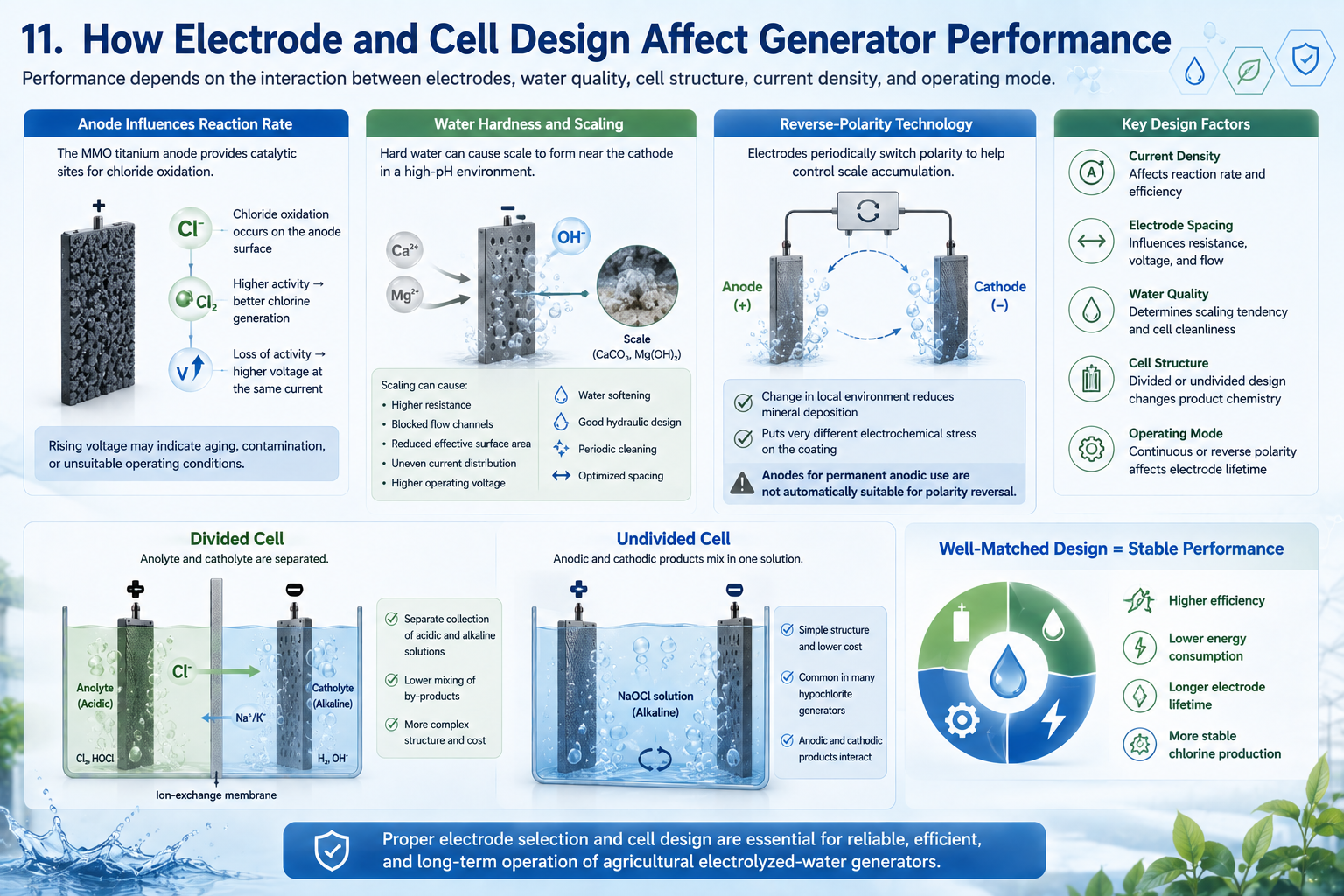
The performance of an agricultural electrolyzed-water generator depends on the interaction between the MMO titanium anode, cathode, water quality, electrode spacing, current density, cell structure, and operating mode.
The anode influences the electrochemical reaction rate and contributes to chlorine-generation performance.
If the catalytic surface gradually loses activity, the voltage required to maintain a given current may increase. This can affect energy consumption and indicate that the electrode is aging, contaminated, or operating outside suitable conditions.
Water hardness is another important factor.
Calcium and magnesium ions in hard water can precipitate near the cathode because hydroxide ions create a high-pH local environment. Over time, mineral deposits can accumulate on the cathode and inside the electrolysis cell.
Scaling may cause higher resistance, blocked flow channels, reduced effective surface area, uneven current distribution, and higher operating voltage.
Water softening, appropriate hydraulic design, periodic cleaning, and optimized electrode spacing can therefore be important.
Some electrolyzed-water generators use reverse-polarity technology to control scale accumulation.
In a reverse-polarity system, an electrode periodically switches between anodic and cathodic operation. The change in local chemical environment can help reduce mineral deposition.
However, reverse polarity also places very different electrochemical stress on the coating.
An MMO coating intended only for permanent anodic chloride evolution should not automatically be assumed to be suitable for repeated polarity reversal.
Another major design choice is whether the system uses a divided or undivided electrolysis cell.
A divided cell allows acidic anolyte and alkaline catholyte to be collected separately.
An undivided cell allows anodic and cathodic products to interact in one overall solution and is commonly used in many hypochlorite-generation systems.
These differences directly influence electrode configuration, flow design, coating selection, and operating conditions.
12. How to Select Titanium Anodes for Agricultural Electrolyzers
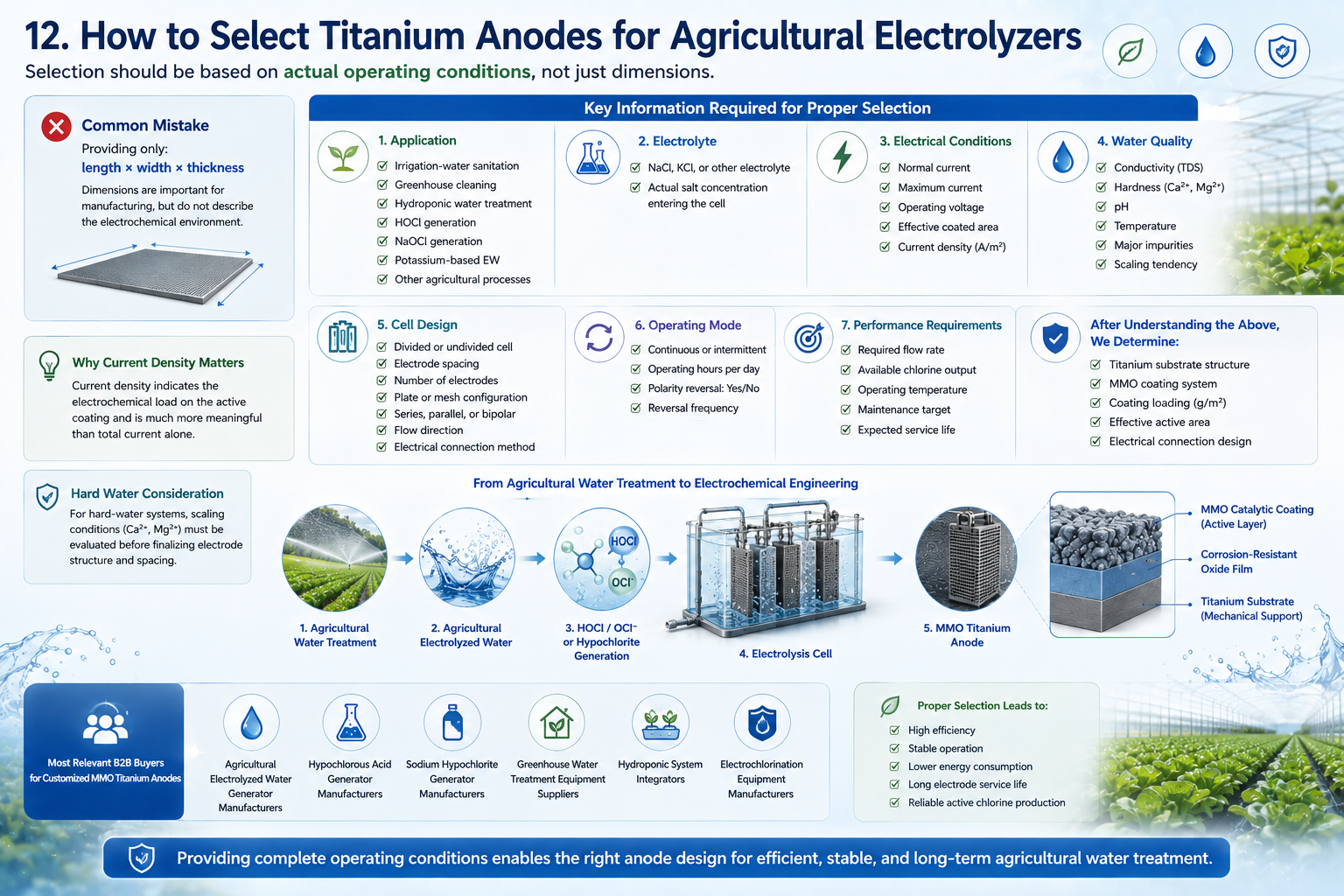
MMO titanium anodes for agricultural electrolyzed-water generators should be selected according to actual electrolyte, current density, cell structure, water quality, polarity mode, chlorine-output requirement, and expected service life.
One of the most common mistakes when purchasing titanium electrodes is to provide only:
length × width × thickness.
These dimensions are important for manufacturing, but they do not describe the electrochemical operating environment.
The first information required is the application.
Is the electrode being used for irrigation-water sanitation, greenhouse cleaning, hydroponic water treatment, hypochlorous acid generation, sodium hypochlorite generation, potassium-based electrolyzed water, or another agricultural electrochemical process?
The electrolyte must also be specified.
A supplier should know whether the system uses NaCl, KCl, or another electrolyte, as well as the actual salt concentration entering the electrolysis cell.
Electrical conditions are especially important. These should include normal current, maximum current, operating voltage, effective coated area, and current density.
Current density indicates the electrochemical load applied to the active coating and is much more meaningful than total current alone.
Water-quality information should include conductivity, hardness, pH, temperature, and major impurities where relevant.
For hard-water systems, scaling conditions should be considered before the electrode structure is finalized.
Cell-design information is equally important:
- divided or undivided cell;
- electrode spacing;
- number of electrodes;
- plate or mesh configuration;
- series, parallel, or bipolar arrangement;
- flow direction;
- and electrical connection method.
Operating mode should also be defined.
The electrode manufacturer should know whether the unit operates continuously or intermittently, how many hours it runs per day, whether polarity reversal is used, and how frequently reversal occurs.
Finally, the manufacturer should provide the required flow rate, available-chlorine output, operating temperature, maintenance target, and expected electrode service life.
Only after these conditions are understood should the electrode supplier determine:
titanium substrate structure + MMO coating system + coating loading + effective active area + electrical connection design.
The complete relationship can therefore be summarized as:
Agricultural Water Treatment
↓
Agricultural Electrolyzed Water
↓
HOCl / OCl⁻ or Hypochlorite Generation
↓
Electrolysis Cell
↓
MMO Titanium Anode
For agricultural users, electrolyzed water is the final treatment medium.
For equipment manufacturers, the generator is the product.
For titanium-anode manufacturers, the electrolysis cell is where agricultural water treatment becomes electrochemical engineering.
That is why agricultural electrolyzed-water generator manufacturers, hypochlorous acid generator manufacturers, sodium hypochlorite generator manufacturers, greenhouse water-treatment equipment suppliers, hydroponic system integrators, and electrochlorination equipment manufacturers are the most relevant B2B buyers for customized MMO titanium electrodes.
Conclusion
Agricultural electrolyzed water combines water treatment with electrochemical technology, and MMO titanium anodes are one of the core components of the generation system.
By electrolyzing chloride-containing water, agricultural electrolyzers can generate active chlorine species such as HOCl and OCl⁻ for irrigation-water sanitation, greenhouse cleaning, hydroponic water treatment, equipment disinfection, and other agricultural applications.
The complete technical relationship can be summarized as:
Agricultural Water Treatment → Electrolyzed Water → HOCl / OCl⁻ Generation → Electrolysis Cell → MMO Titanium Anode
For equipment manufacturers, the titanium anode should be selected according to the actual salt concentration, current density, water quality, cell design, polarity mode, target chlorine output, and expected service life.
A properly matched MMO titanium anode can help support stable electrolysis performance, reliable chlorine generation, lower maintenance requirements, and longer equipment service life.