Home  /  Titanium Electrode  /  Ruthenium-Iridium Titanium Anode Product Range · Ruthenium-Iridium Titanium Anode

Ruthenium-Iridium Titanium Anode

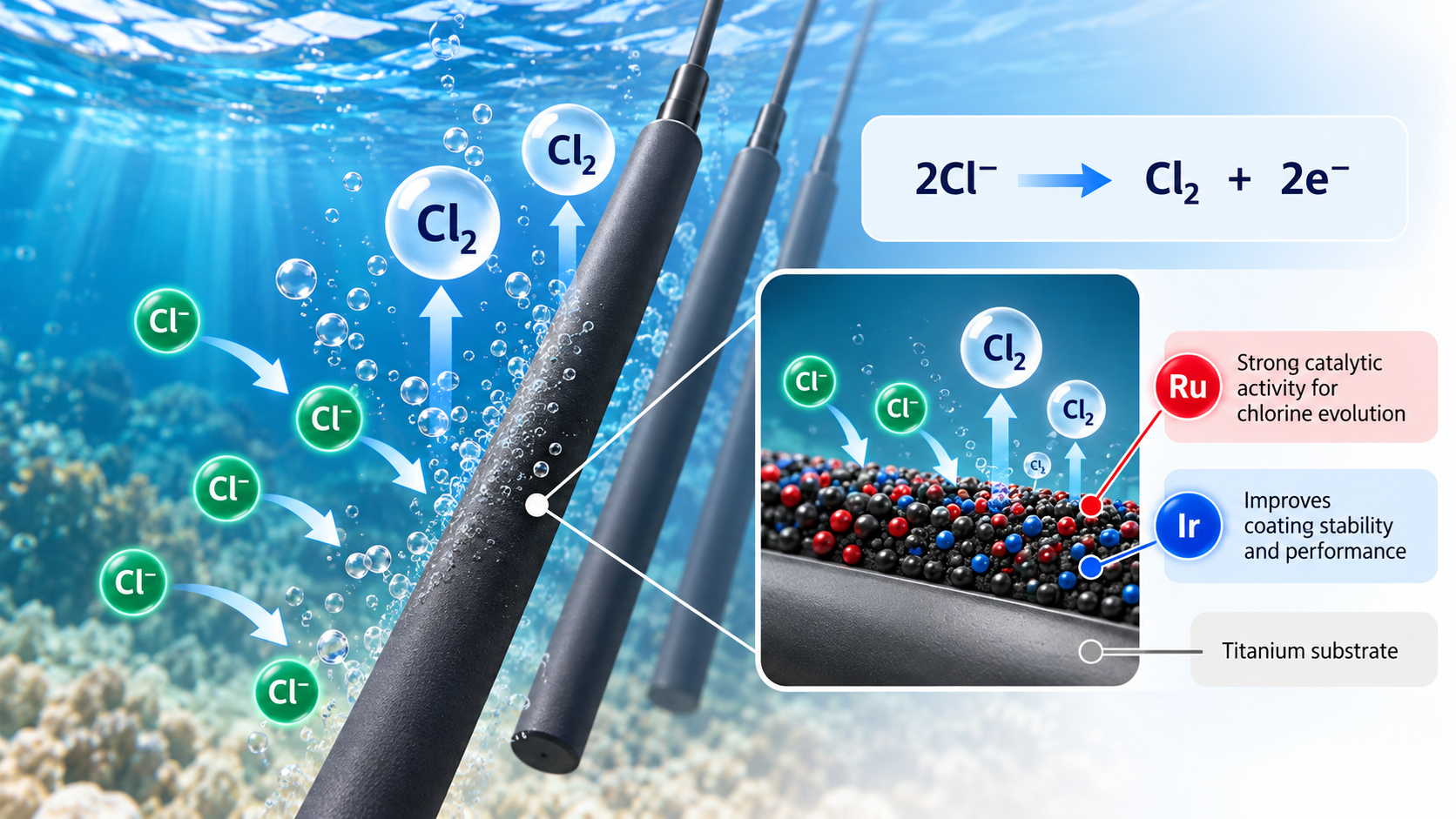
RuO₂–IrO₂ coated titanium anodes for chlorine evolution in chloride-rich electrolytes, with coating loading and rating confirmed against your engineering data.

Get a Quote Talk to an Engineer
Chlor-AlkaliHypochloriteSeawater ElectrolysisMarine CP
8–20 g/m²Ru-Ir Coating Loading
3–8 yrsDesign Life at Rating
100%Coating Batch Verified
24hEngineering Response
Ruthenium-iridium coated MMO titanium anodes for chlorine evolution duty
Selection Boundary

Selection Boundary

This page covers: RuO₂–IrO₂ coated (ruthenium-iridium) titanium anodes for chlorine-evolution duty — chlor-alkali, sodium hypochlorite generation, seawater electrolysis, pool chlorination and marine/saline cathodic protection.
This page does not cover: platinum-coated (Pt/Ti) anodes or Ir-Ta (acidic oxygen evolution) MMO anodes. For platinum-coated duty, see Platinum-Coated Titanium Anode. For oxygen evolution in acidic electrolytes, see Iridium-Tantalum Titanium Anode.
Selection note: coating loading, current density, and service life are interdependent and are confirmed together per quotation — none is guaranteed independently.
Introduction

Introduction

Ruthenium-iridium coated titanium anodes (RuO₂–IrO₂/Ti) combine a titanium substrate with a mixed-metal-oxide coating engineered for chlorine evolution in chloride-rich electrolytes. They are the standard choice for chlor-alkali cells, sodium hypochlorite generators, seawater electrolysis and pool chlorination, where they hold a stable potential and low consumption under heavy chlorine duty. Actual performance depends on coating loading, current density and electrolyte chemistry, and is confirmed per quotation rather than stated as a universal value.

Ehisen applies the Ru-Ir coating in controlled multi-layers with measured precious-metal loading, and verifies every batch before dispatch. Each anode is engineered to your substrate dimensions, electrical duty, and operating conditions.

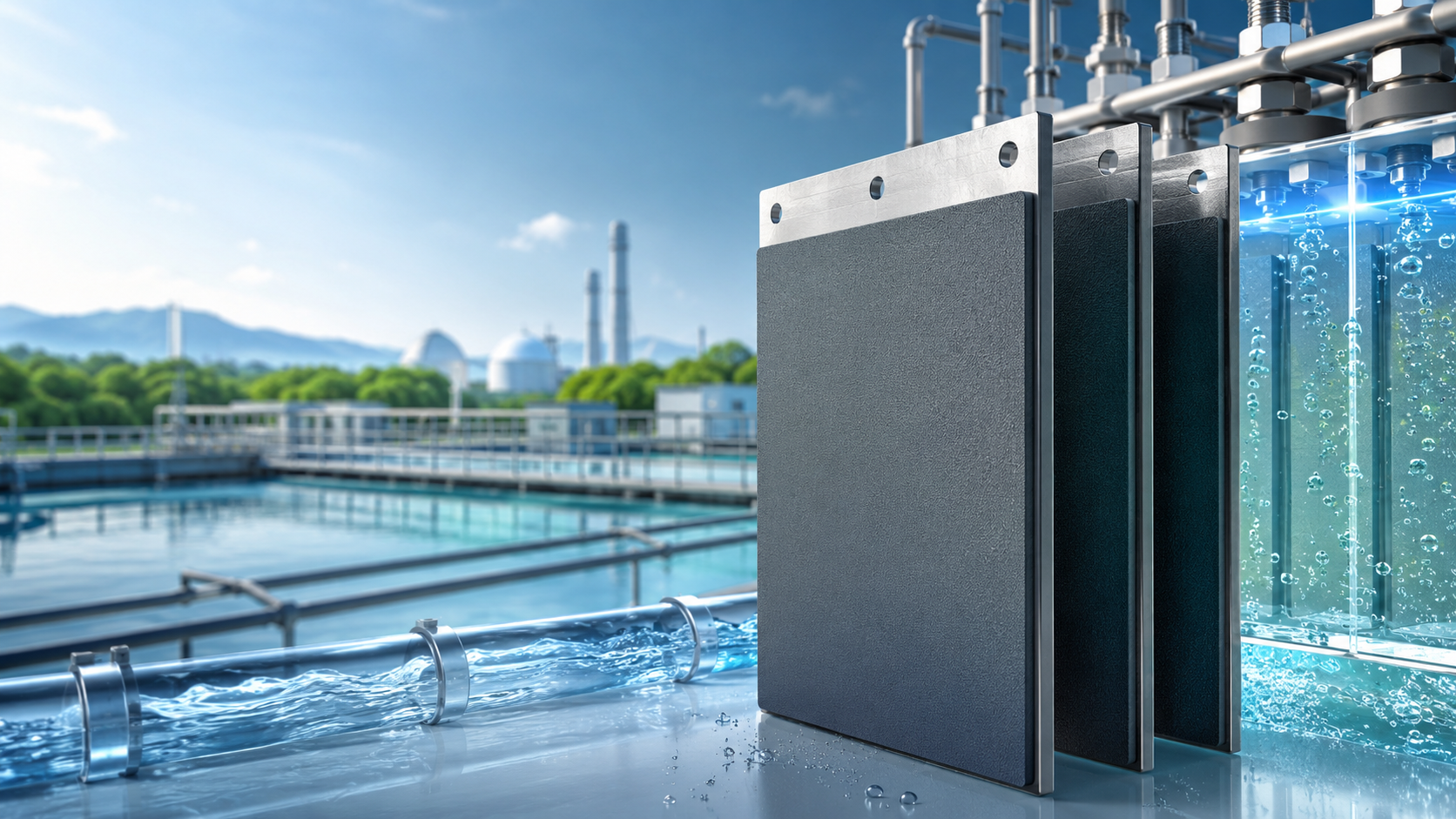
Ruthenium-iridium coated titanium electrode for pool chlorinator and chlorine duty
Product Gallery

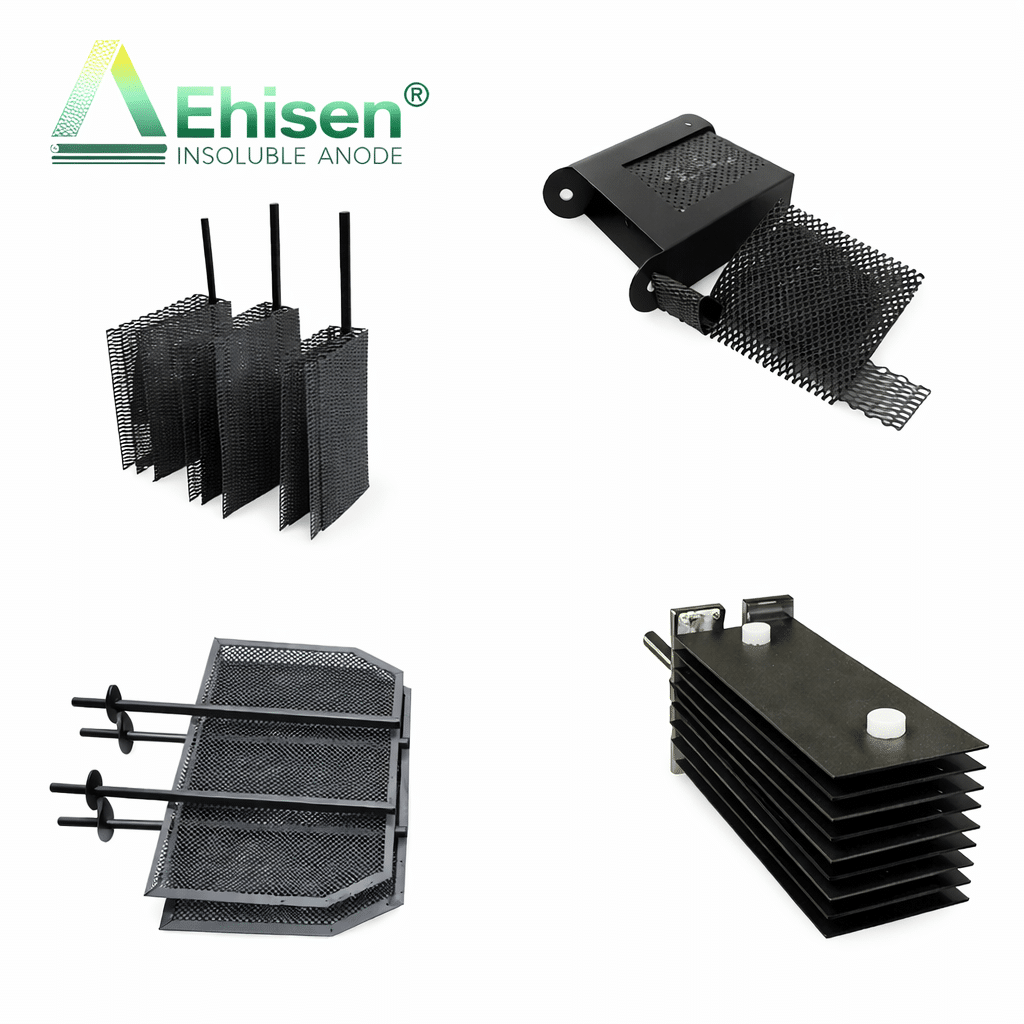
Ruthenium-Iridium Titanium Anode Formats

Standard formats include plate, mesh, tube, rod and wire. Other shapes and dimensions are produced to drawing.
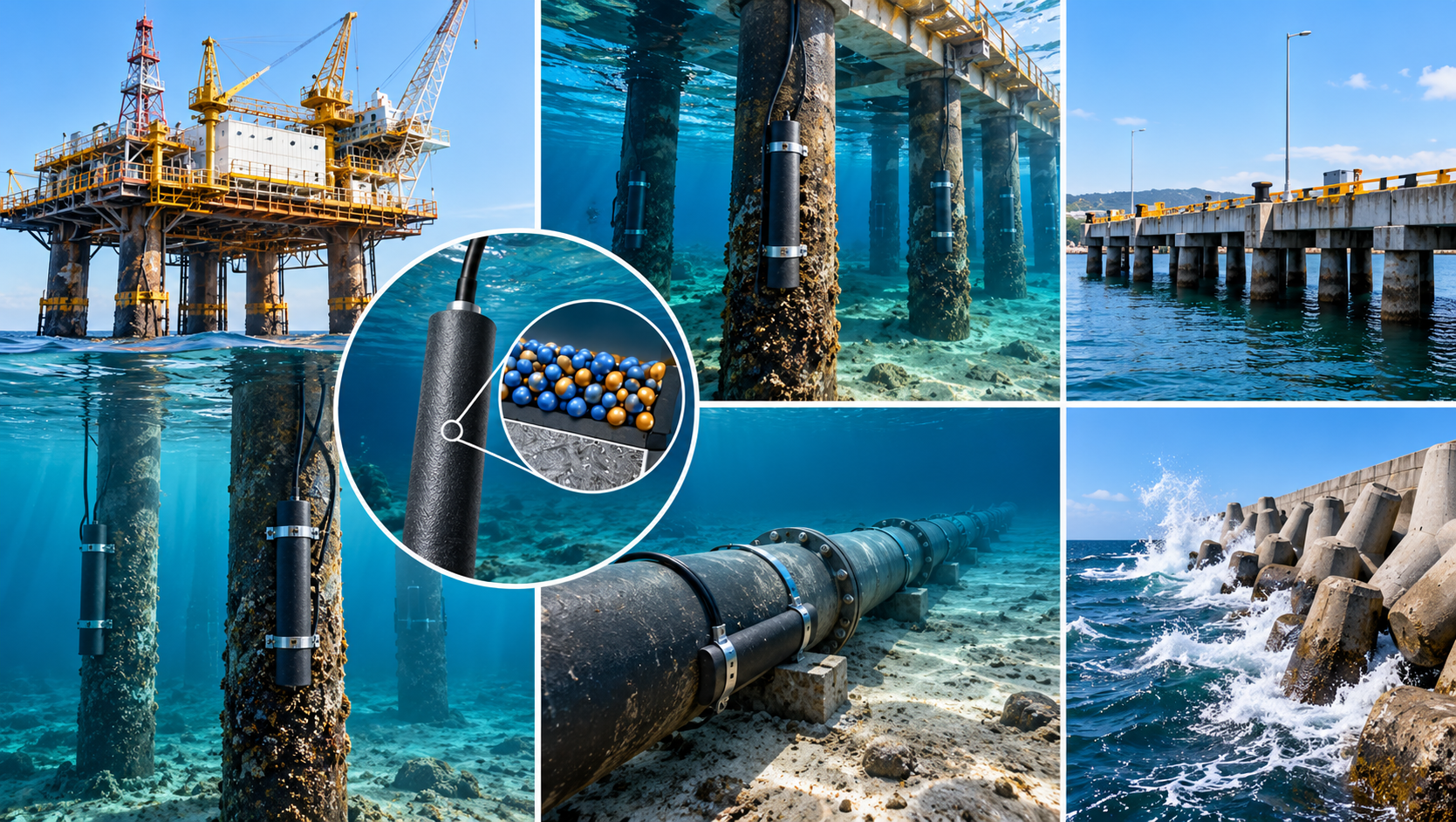
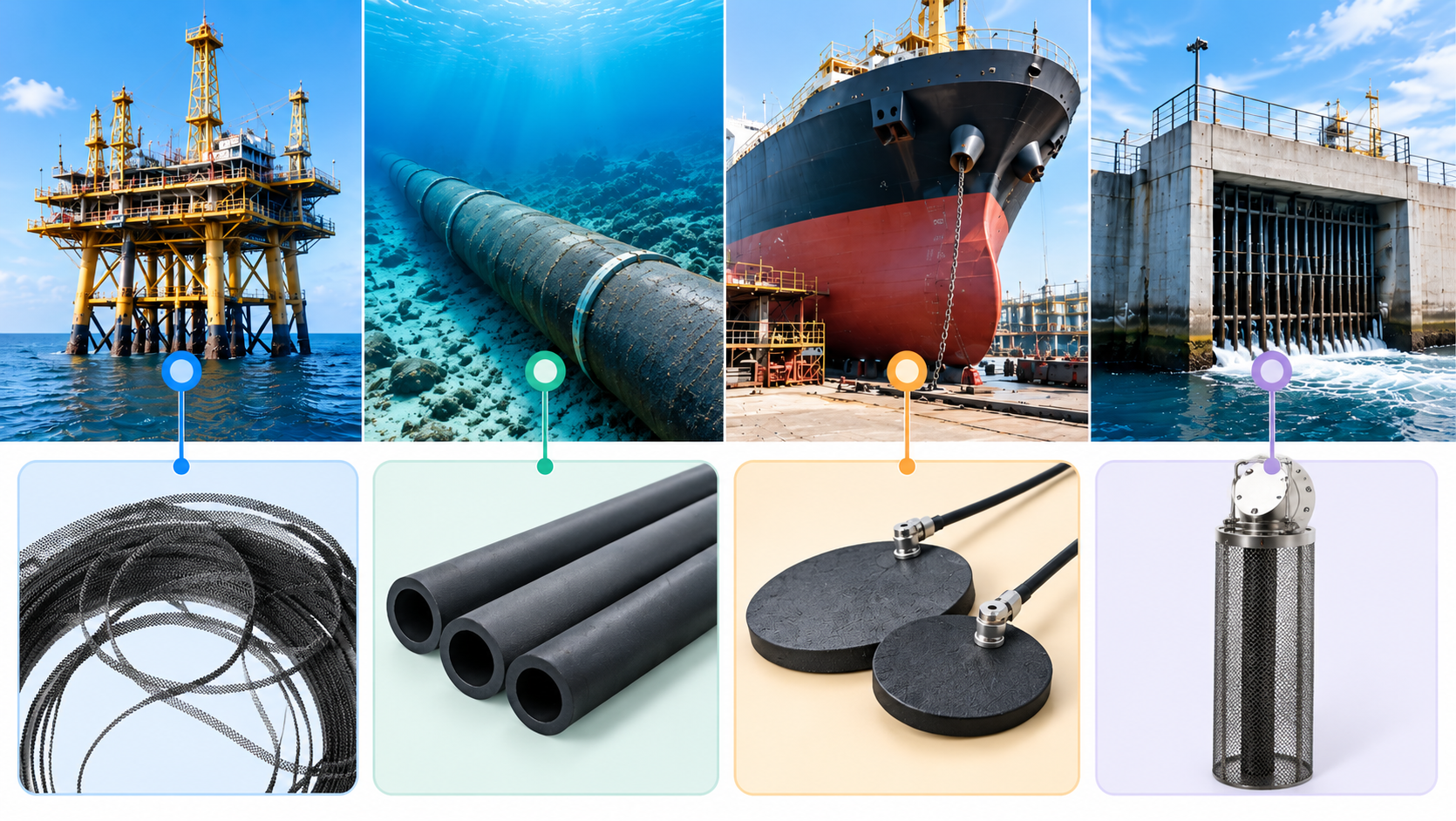
Ruthenium-iridium MMO titanium anodes for seawater cathodic protection
Ru-Ir seawater CP
Ruthenium-iridium titanium anodes for marine and chloride-rich duty
Ru-Ir marine duty
Ru-Ir MMO titanium anodes in chloride-rich environments
Chloride-rich service
Salt water pool chlorinator titanium electrode
Pool chlorinator electrode
Engineering Basis

Engineering Basis

The four inputs below define every Ru-Ir anode quotation. Provide them and we will confirm coating thickness, current-density rating and service life together.

Engineering ItemRequired Definition
Target reactionAnodic main reaction (OER / CER / other) and competing reactions
ElectrolyteFull composition, acidity, chloride / fluoride, contaminants
Electrical dutyTotal current, current-density basis, polarity, peaks
Design-life basisFailure criterion and expected operating hours
RuO₂–IrO₂: chloride-rich chlorine evolutionCoating verified by XRF thickness measurementSubstrate: ASTM B265 Gr1 / Gr2 titanium
Technical Specifications

Technical Specifications

Standard parameters are listed below; values marked per order are confirmed against your engineering data.

ParameterSpecification
SubstrateGrade 1 / Grade 2 titanium
CoatingRuthenium-Iridium (RuO₂–IrO₂)
Coating loading8–20 g/m², custom available
ShapePlate / mesh / tube / rod / custom
DimensionsPer drawing (L × W × T)
Current densityConfirmed per order
Operating tempConfirmed per order
Service lifeConfirmed per loading & conditions
Coating Quality

Coating Control & Surface Quality

Coating loading and uniformity are measured, not assumed — the parameters that actually control anode life and current distribution.
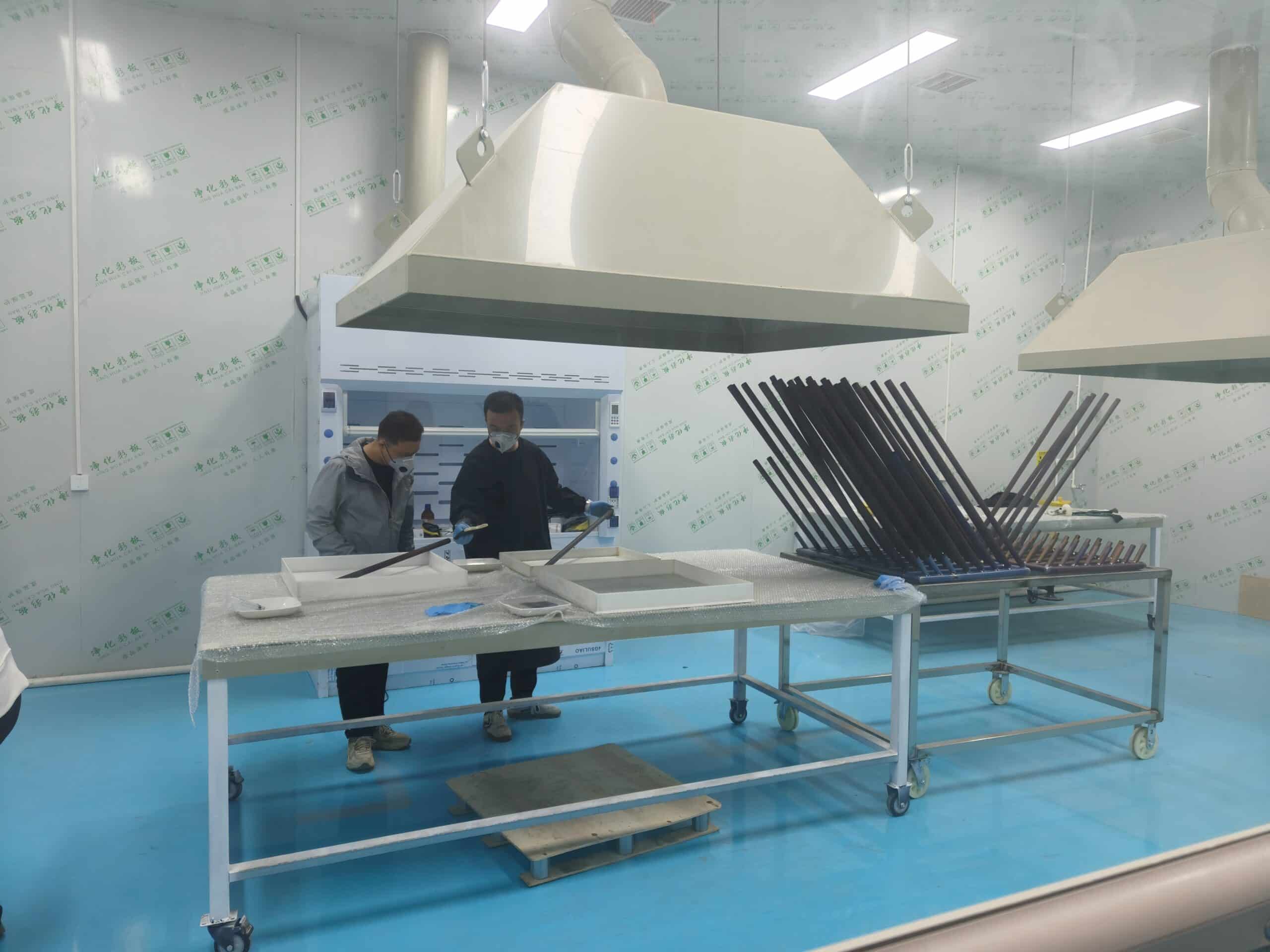
Ruthenium-iridium MMO coating process control on a titanium anode

Coating Loading & Uniformity

Active coating loading is measured and controlled per batch — the value that sets current-density rating and design life.
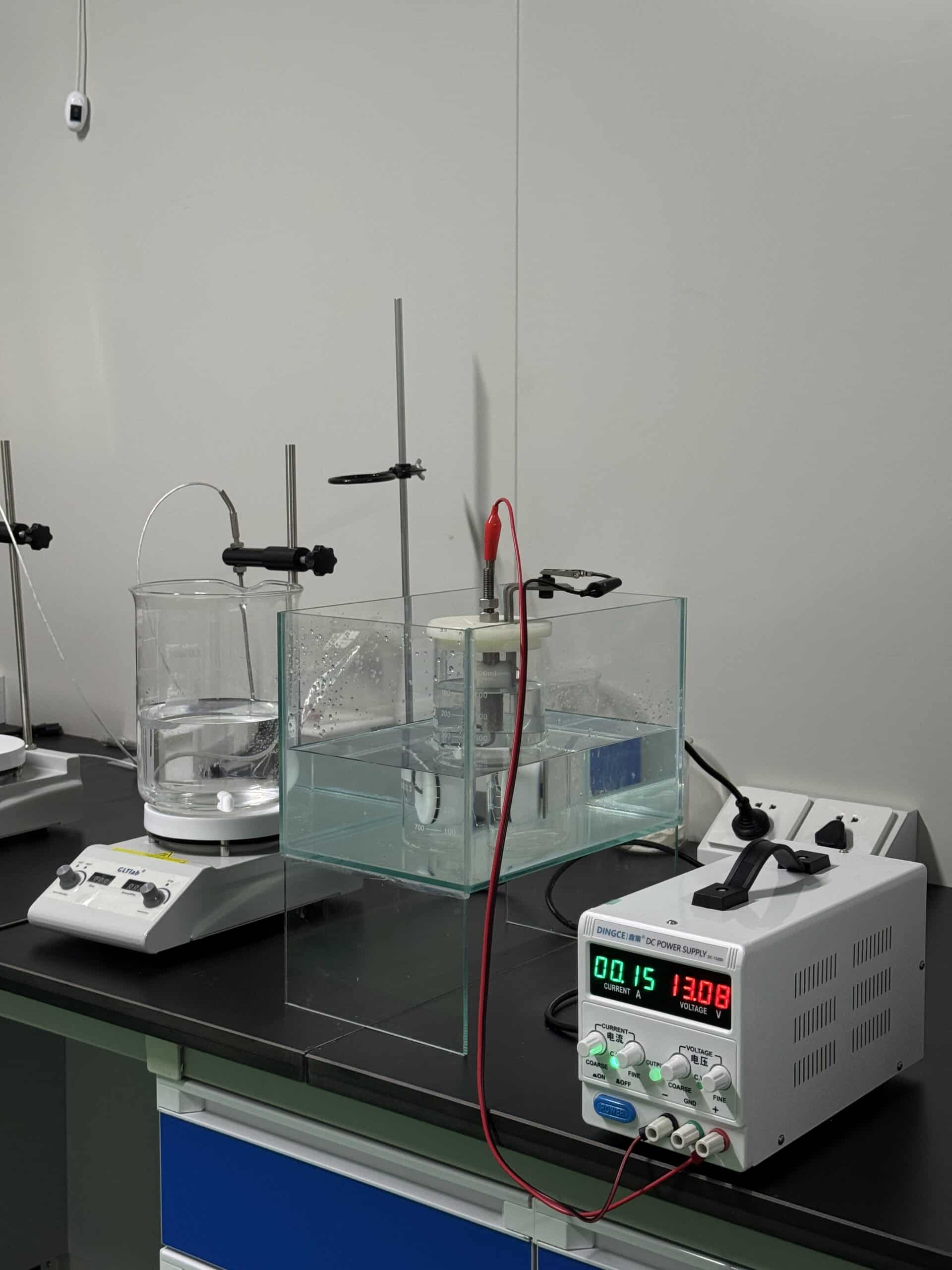
Titanium anode life extension testing under electrochemical load

Bonding & Thermal Cycling

Adhesion and thermal cycling are checked during production to keep the coating stable under thermal and electrochemical load.

Order Basis

Order Basis

Share the five requests below and we will return a quotation with coating loading, rating and life confirmed together.

RequestDefinition
Electrolyte compositionFull formula, acidity, temperature
Current dutyTotal current / current density / polarity
Coating loading targetThickness or life target
DimensionsDrawing or dimensions
ConnectionWelding / threaded / flange
Minimum order: negotiable per formatDocuments: MTC · coating report · XRF data · inspection record · CoC
FAQ

FAQ

What is the difference between Ru-Ir and Ir-Ta coated titanium anodes?
RuO₂–IrO₂ (Ru-Ir) coatings are preferred for chlorine evolution in chloride-rich electrolytes such as chlor-alkali, hypochlorite and seawater duty. IrO₂–Ta₂O₅ (Ir-Ta) coatings suit oxygen evolution in acidic media. Tell us your electrolyte and target reaction and we will recommend the right coating.
How long does a ruthenium-iridium titanium anode last?
Service life depends on coating loading, current density and operating conditions. A well-selected Ru-Ir anode typically lasts several years in normal chlorine duty; the exact life is confirmed per order against your duty cycle.
Can a ruthenium-iridium anode be re-coated after its coating wears out?
Yes. The titanium substrate can be stripped and re-coated with fresh Ru-Ir coating, significantly lowering long-term ownership cost.

Get a Quote for Your Application

Send your electrolyte composition, electrical duty and design-life target — we will confirm coating loading, current-density rating and service life together, within 24 hours.

Get a Quote Talk to an Engineer