
Ru-Ir, Ir-Ta and platinized titanium anodes for sodium hypochlorite generation, electro-chlorination, ballast water and wastewater electrolysis. Dimensionally stable, salt-tolerant and documented — so disinfection dose, cell life and operating cost stay under control.
Request a Quote Talk to an Engineer
Bulk sodium hypochlorite means transport, storage, concentration drift and on-site hazards. On-site electro-chlorination generates the oxidant only when and where it is needed — from brine or seawater — and stores nothing more hazardous than dilute product.
The whole economics sit on the anode. A correct Ru-Ir MMO coating holds a stable chlorine-evolution potential for 5–10 years at 1–3 kA/m², while a poor coating drifts in potential, scales up, and dies in months. Coating formulation, loading and cell design decide whether your generator makes a profit or a repair bill.
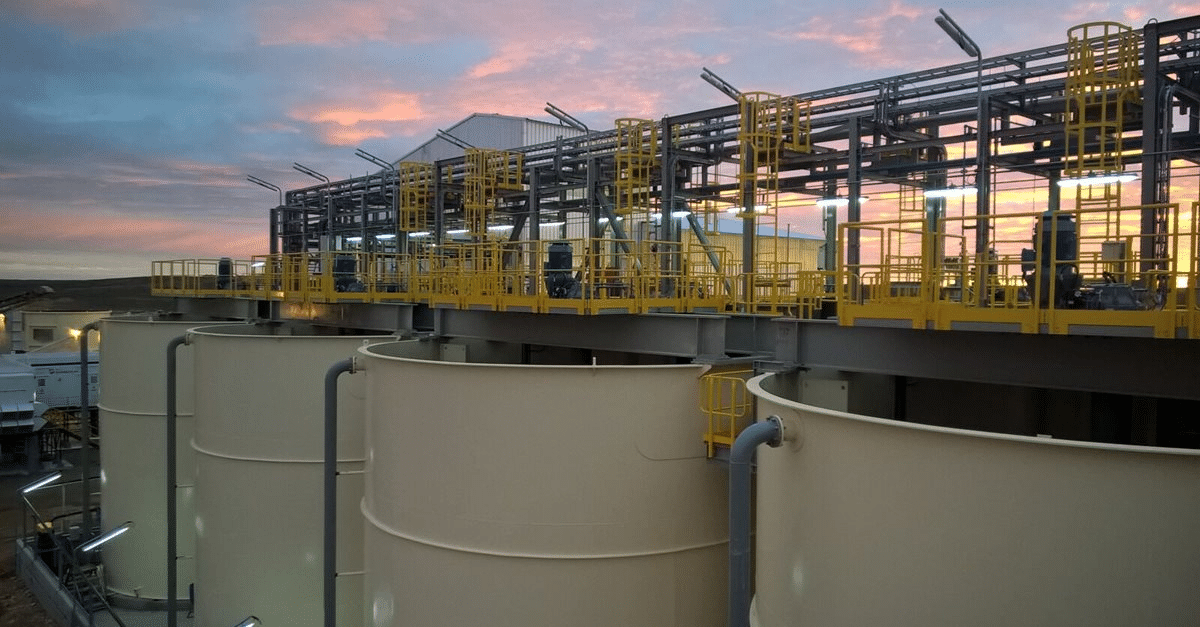
Four failure modes dominate real installations. Each one is preventable with the right coating and cell design.
Hard water deposits calcium and magnesium scale directly on the anode surface, blocking active area and raising cell voltage until the coating fails from overheating.
Operating above the rated density — chasing a higher chlorine dose — consumes the Ru-Ir coating in months and voids the design-life basis.
Using an oxygen-evolution coating in a chlorine service — or vice versa — gives poor current efficiency, off-spec product and early death.
Cyclic on-off operation with dry periods oxidises the coating and lifts it from the substrate. Anodes need a rating that includes your duty cycle, not just peak amperage.
Match your electrolyte and duty to the correct coating and format. The table below is the fast path — our engineers refine it with your cell voltage, flow and target dose.
| Application | Recommended Anode | Coating | Current Density | Typical Life | Key Benefit |
|---|---|---|---|---|---|
| Sodium hypochlorite (brine / seawater) | MMO tubular / plate | Ru-Ir | 1–3 kA/m² | 5–10 yrs | Stable chlorine evolution |
| Electro-chlorination, power / marine | MMO plate / mesh | Ru-Ir / Ir-Ta | 1–2.5 kA/m² | 5–8 yrs | Low scaling, salt tolerant |
| Wastewater electro-oxidation | Ir-Ta MMO plate | Ir-Ta | 0.5–2 kA/m² | 3–8 yrs | Oxygen evolution stability |
| Ballast water treatment | MMO tubular / rod | Ru-Ir | 1–3 kA/m² | 5–10 yrs | Compact high-current format |
| Pool & spa disinfection | Platinized Ti plate | Pt | Up to 1 kA/m² | 5–10 yrs | Clean product, no sludge |
| Desalination / RO pre-treatment | MMO mesh / wire | Ru-Ir | 1–2 kA/m² | 5–8 yrs | Even current distribution |
Six core titanium anode formats for electro-chlorination, disinfection and wastewater electrolysis, each coated and rated to its electrolyte with traceable material and coating documentation.
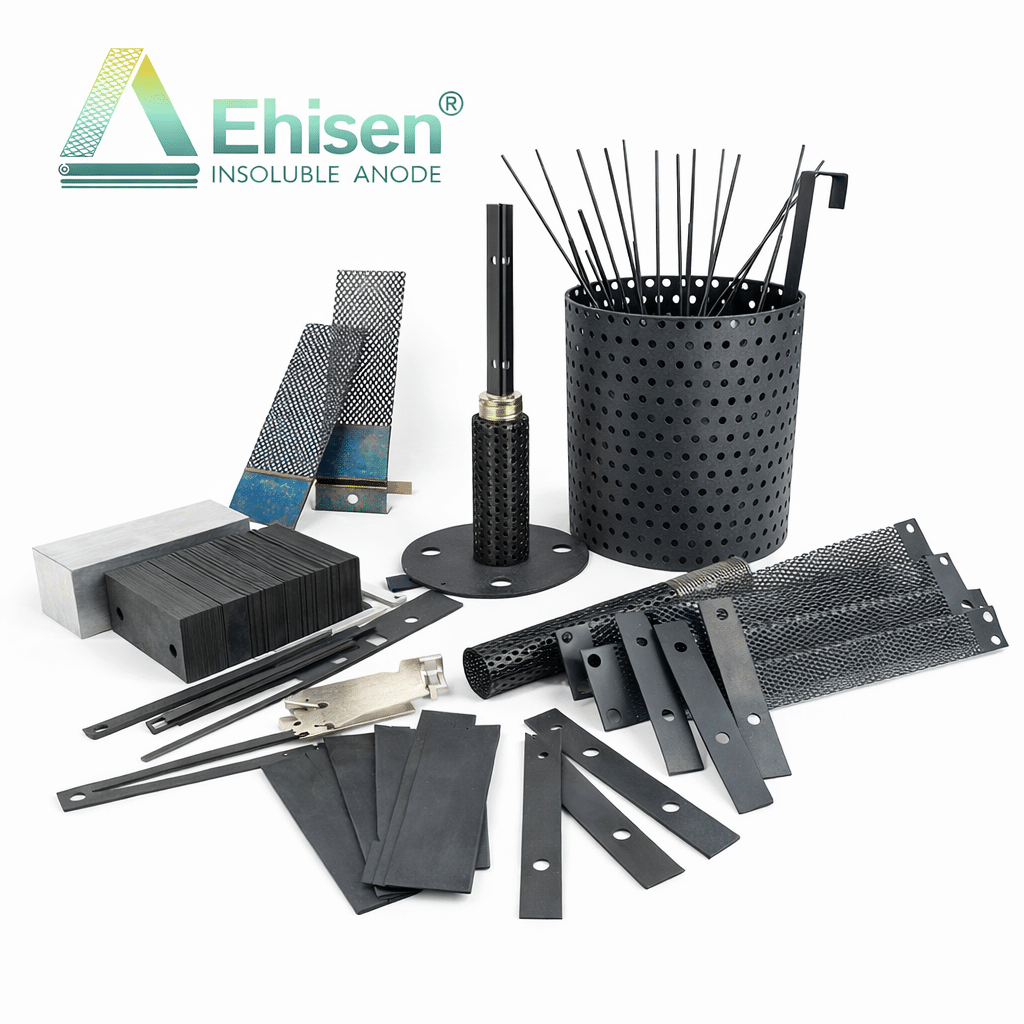
High-loading chlorine-evolution anodes for on-site hypochlorite generators and electro-chlorination cells running on brine or seawater.
| Substrate | Gr1 Ti plate / expanded mesh |
| Coating | RuO₂/IrO₂ |
| Current density | 1–3 kA/m² |
| Design life | 5–10 years at rating |
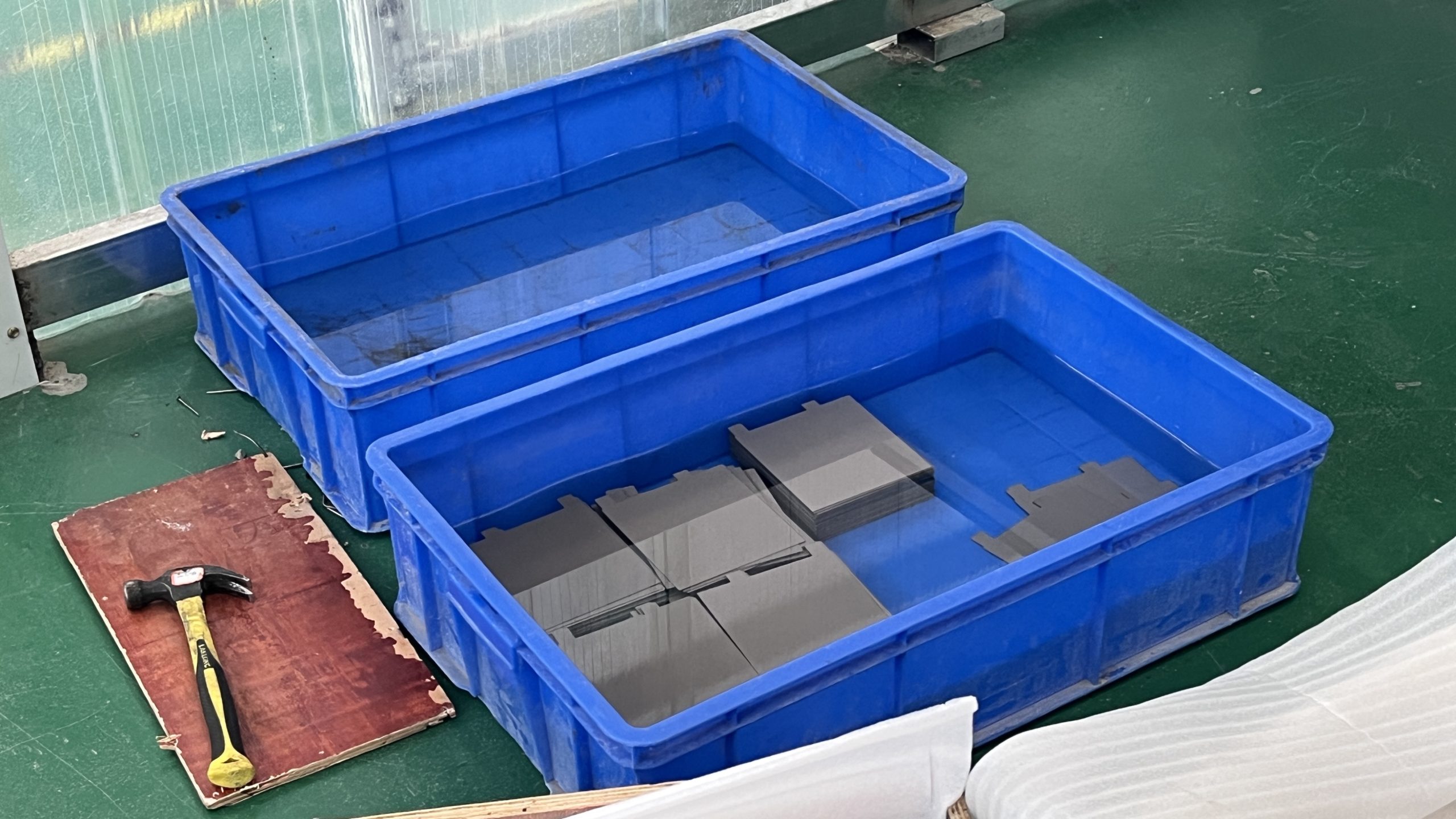
Stable oxygen-evolving anodes for wastewater electro-oxidation, COD / ammonia removal and high-purity oxidation duty.
| Formats | Plate · mesh |
| Coating | IrO₂/Ta₂O₅ |
| Current density | 0.5–2 kA/m² |
| Design life | 3–8 years |
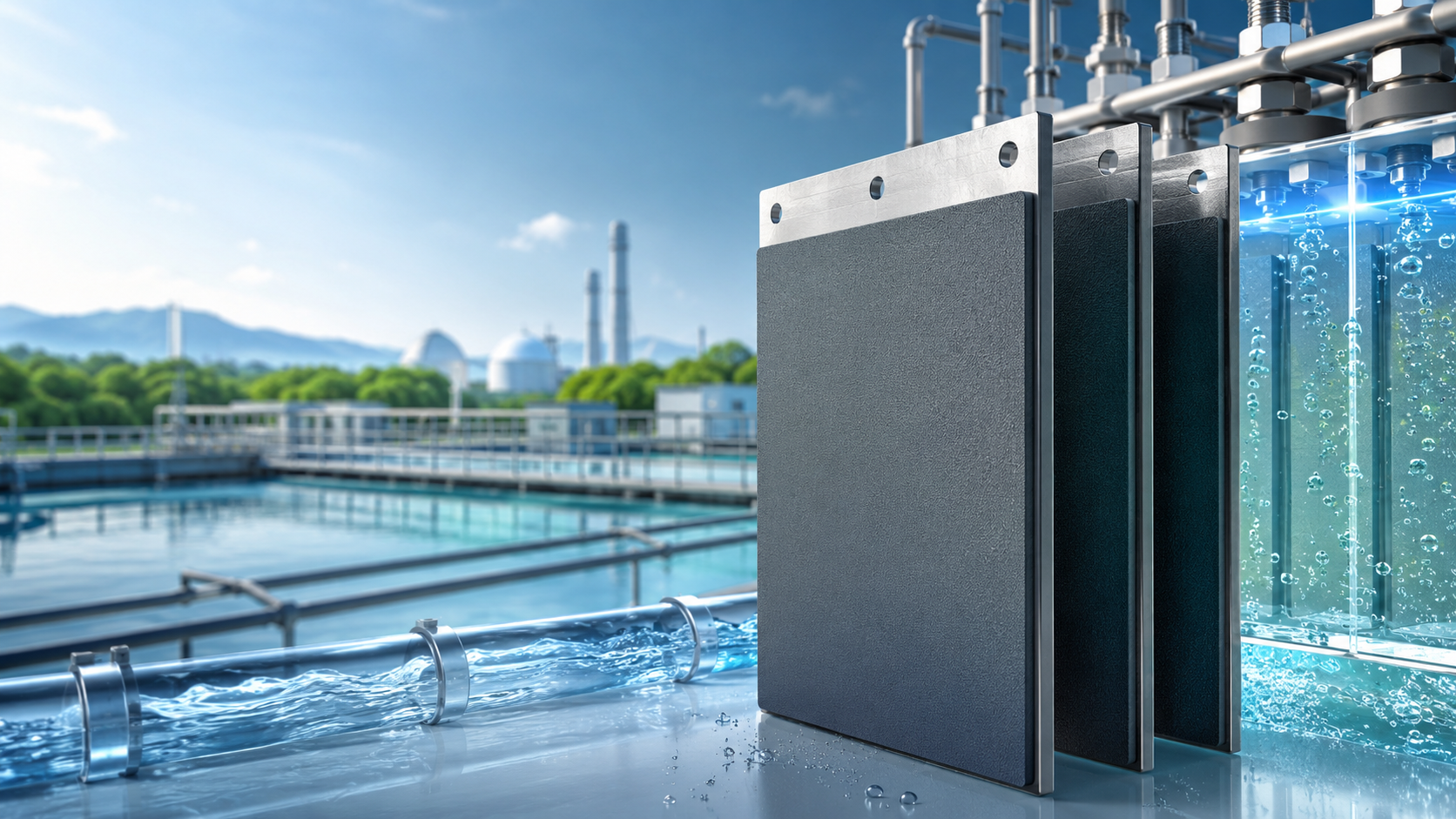
Precision platinum coatings for pool, spa and small-scale disinfection cells that need clean product and a compact footprint.
| Substrate | Gr1 / Gr2 Ti |
| Coating | Pt, 5–20 g/m² |
| Current density | Up to 1 kA/m² |
| Design life | 5–10 years |
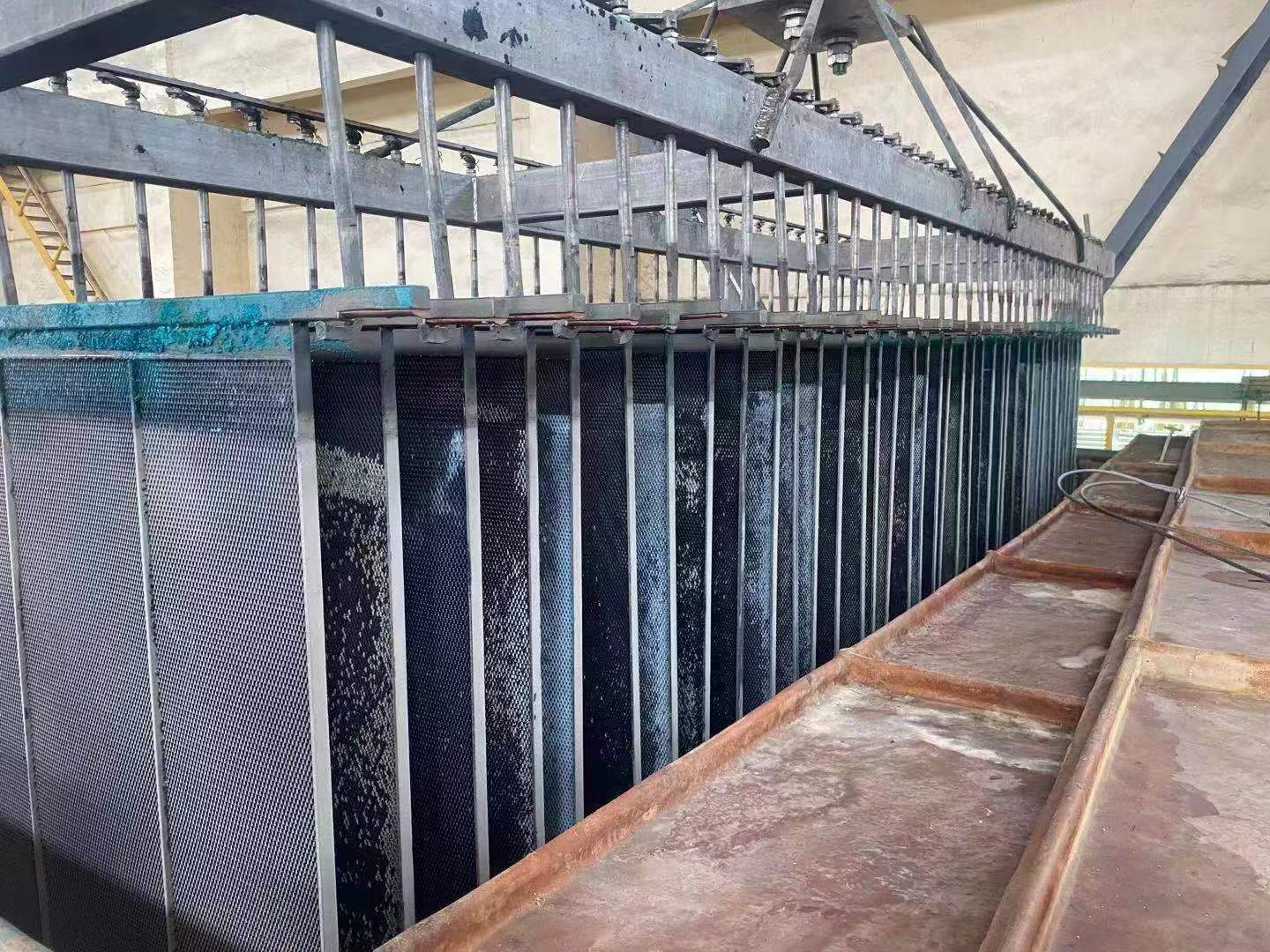
Large-area mesh electrode banks for seawater electro-chlorination and ballast water systems where even current spread matters.
| Format | Expanded mesh |
| Coating | Ru-Ir MMO |
| Current density | 1–2.5 kA/m² |
| Design life | 5–8 years |
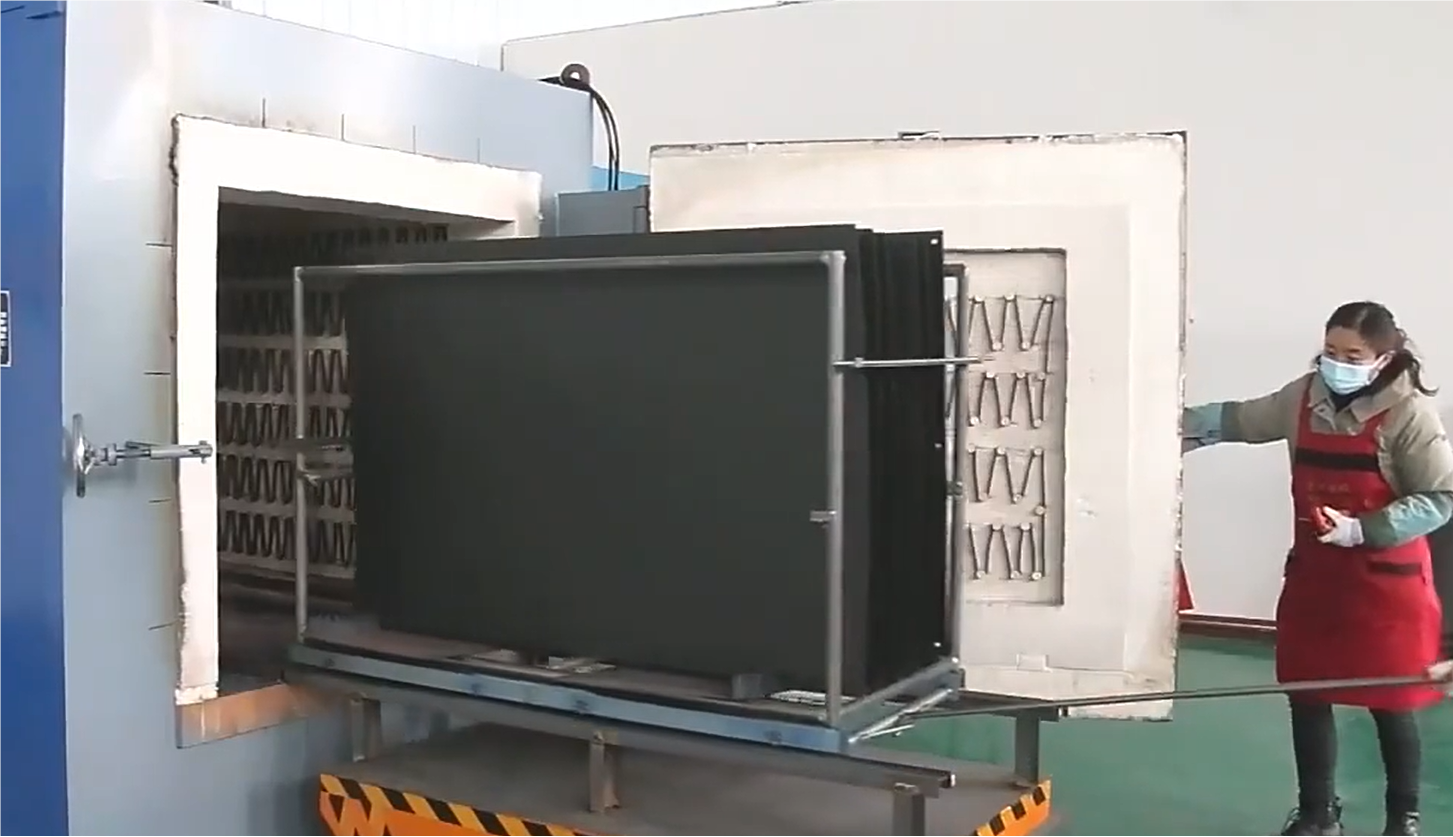
Cylindrical anodes for compact hypochlorite generators and in-line electro-chlorination, tolerant of intermittent duty.
| Diameter | Φ16 – Φ50 mm |
| Length | 200 – 2000 mm |
| Coating | Ru-Ir MMO |
| Current density | 1–3 kA/m² |
| Design life | 5–10 years |
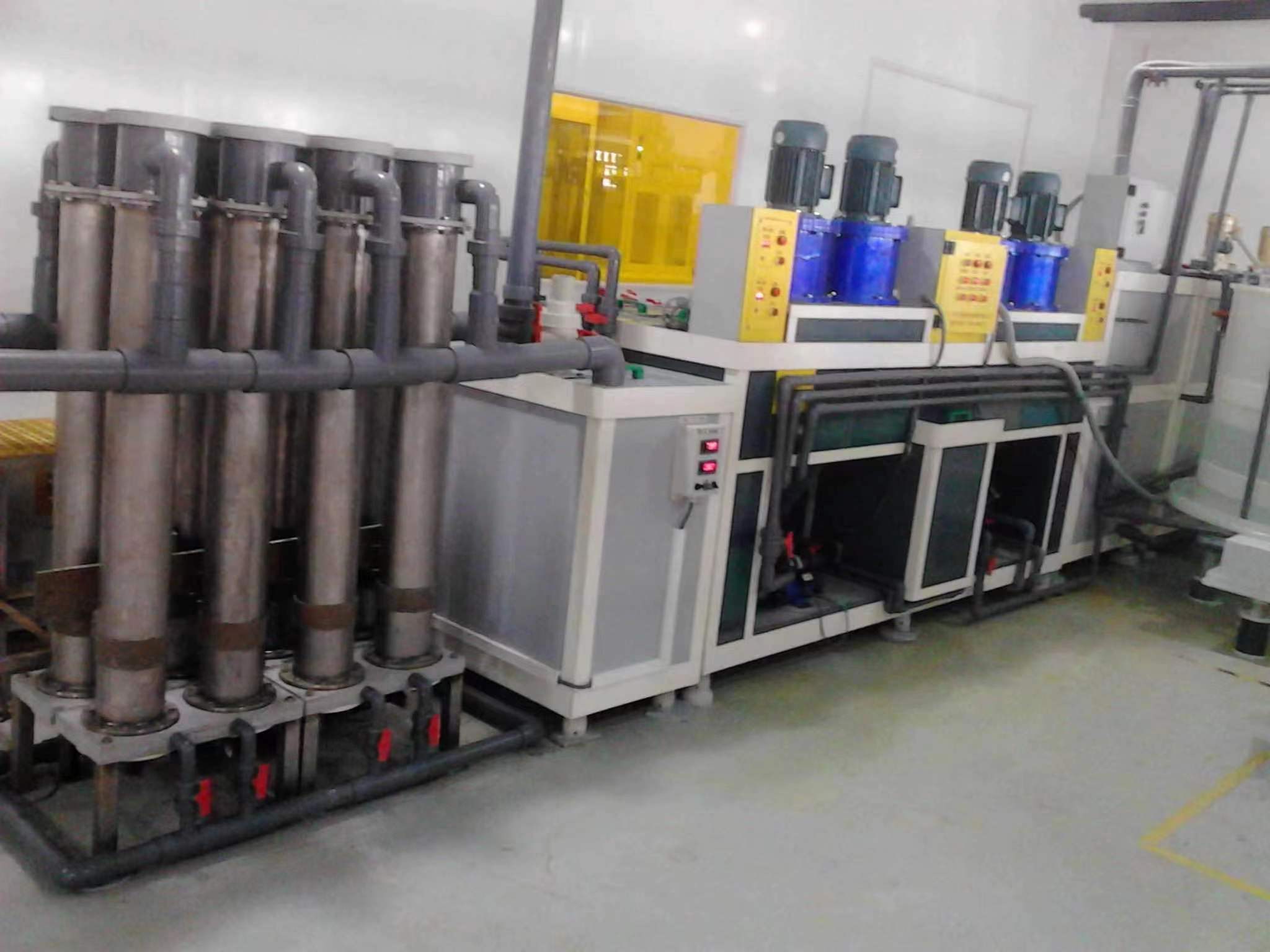
Complete anode sets for on-site sodium hypochlorite generators — cells, current connections and rated anodes supplied together.
| System | Cell bank + dosing |
| Coating | Ru-Ir MMO |
| Output | 0.5–200 kg/day Cl₂ |
| Design life | 5–10 years |
Factory reference tables for the three core water-treatment anode formats, rated at 2 kA/m² for chlorine evolution. Other sizes and loadings can be customised on request.
| Ru-Ir Plate / Mesh Anode (Chlorination) | Size (mm) | Active Area (m²) | Current @ 2 kA/m² (A) | Loading (g/m²) | Life (yrs) |
|---|---|---|---|---|---|
| Plate 100 × 100 | 100 × 100 × 2 | 0.02 | 40 | 10–20 | 5–10 |
| Plate 200 × 200 | 200 × 200 × 2 | 0.08 | 160 | 10–20 | 5–10 |
| Mesh 300 × 500 | 300 × 500 × 1.5 | 0.30 | 600 | 10–20 | 5–10 |
| Mesh 600 × 1200 | 600 × 1200 × 1.5 | 1.44 | 2880 | 10–20 | 5–10 |
| MMO Tubular Anode (Hypochlorite) | Diameter (mm) | Length (mm) | Current @ 2 kA/m² (A) | Coating | Life (yrs) |
|---|---|---|---|---|---|
| Φ16 mm | 16 | 500–1500 | 50–150 | Ru-Ir | 5–10 |
| Φ25 mm | 25 | 500–1500 | 80–240 | Ru-Ir | 5–10 |
| Φ32 mm | 32 | 500–2000 | 100–400 | Ru-Ir | 5–10 |
| Platinized Titanium Anode | Pt Loading (g/m²) | Current Density (kA/m²) | Life (yrs) | Application |
|---|---|---|---|---|
| Mesh / plate / rod | 5–20 | 0.5–1.0 | 5–10 | Pool disinfection · high-purity duty |
Every disinfection anode ships with traceable substrate, coating and testing records aligned to ISO-style quality management — so plant operators can trust the dose, the cell life and the audit trail.
All production runs under a certified quality management system with full batch traceability from titanium substrate to final test.
Titanium substrate to ASTM B265 Gr1 / Gr2 with chemical and mechanical traceability.
Coating thickness and precious-metal loading verified per batch — the parameters that actually control anode lifetime in brine and seawater duty.
Performance verified per NACE TM0108-2008 at elevated current density in chloride electrolyte under rated conditions.
Third-party reports available on request for coating thickness, adhesion and precious-metal loading.
Certificate of conformity, packing list and inspection records prepared for plant handover and audits.
Lifetime is verified by accelerated life testing — not field wait. We test at elevated current density in the chloride media your cell actually runs, then convert the data to your operating rating.
| Coating System | Medium | Current Density (A/m²) | Temperature (°C) |
|---|---|---|---|
| Ru-Ir MMO | 1 mol/L Na₂SO₄ + NaCl | 10,000 | 25 ± 5 |
| Ru-Ir MMO | Seawater | 10,000 | 25 ± 5 |
| Ir-Ta MMO | 1 mol/L H₂SO₄ | 20,000 | 40 ± 5 |
Sustains reliable chlorine output in hypochlorite generators, electro-chlorination cells and seawater electrolysis without accelerated wear.
Coating formulated for chloride-rich media, resisting the scale and fouling that shorten unprotected anode life.
Controlled precious-metal loading per batch keeps cell voltage, chlorine output and lifetime consistent across the whole anode bank.
Ir / Ru loading verified per batch — the loading level is what actually controls anode lifetime in chlorinated duty.
Send us your water chemistry — salt source, salinity, flow rate, target chlorine dose, current density and cell dimensions — and our engineers will recommend the correct coating, electrode format and quantity within 24 hours.
Talk to an Engineer Email UsComplete the fields below and send — your requirements will open in WhatsApp so our engineers can reply directly.
Reliable disinfection is a system result — rectifier, electrodes, cell, salt feed and dosing must work together. Ehisen supplies the anode at the heart of the current path.
Converts AC to DC and sets cell current and voltage. Stable, low-ripple output keeps chlorine generation efficient and extends electrode life.
The current-discharging element — Ru-Ir MMO or platinized titanium in plate, mesh or tubular format, rated to the salinity and target current density.
The electrode housing and flow chamber where brine or seawater is converted into hypochlorite. Cell geometry controls current distribution and dose consistency.
Softened brine or filtered seawater is fed at controlled concentration and flow — consistent salt feed is the basis of a predictable chlorine dose.
Generated hypochlorite is dosed into the water stream at the process point, sized by flow and target residual concentration.
Flow, current, cell voltage, residual chlorine and gas detection are logged so output is verified per batch, not just per shift.
Building or retrofitting a disinfection system follows a proven four-stage sequence. Ehisen supports you at every stage with engineering input and documented hardware.
Water chemistry, salinity, flow rate, target chlorine dose, cell size and duty cycle are reviewed, then electrode format, coating and quantity are calculated.
We recommend the coating system and can supply a sample anode for testing in your actual brine or seawater cell before full production.
Electrodes are manufactured with batch traceability, coating inspection and accelerated life testing, with full process records shipped alongside.
Electrodes are positioned, electrical connections verified, and chlorine output checked during the trial run until the residual dose is stable.
Plant operators choose Ehisen because coating consistency, traceability and engineering response decide how long a disinfection anode really lasts — not just the catalogue price.
Coating applied on our own production line with a fixed formulation and controlled loading tolerance — samples and bulk runs are made to the same standard.
Every batch carries a LOT number linking substrate material, coating process records, inspection results and shipping documents.
Accelerated life testing per NACE TM0108-2008 in chloride media converts laboratory hours into your operating rating and design life.
Our engineers review your water chemistry, salinity, chlorine dose and cell geometry, then recommend coating, format and quantity — within 24 hours.
Export experience across 40+ countries with complete documentation: MTC, coating reports, inspection records, certificate of conformity.
Production planned against your plant schedule, with order status updates from coating to packing list.
A clear, three-step process keeps every disinfection order on specification and on schedule.
Share your water chemistry, flow rate, chlorine dose and cell details via WhatsApp or email — or send a cell drawing and we will extract the parameters.
Within 24 hours you receive a recommendation: electrode coating, format, dimensions, quantity and the supporting calculation basis.
After approval, production runs with batch QC, then ships with the full document pack: MTC, coating report, ALT data and packing list.
Send us a message if you have any questions or request a quote. We will be back to you ASAP!