
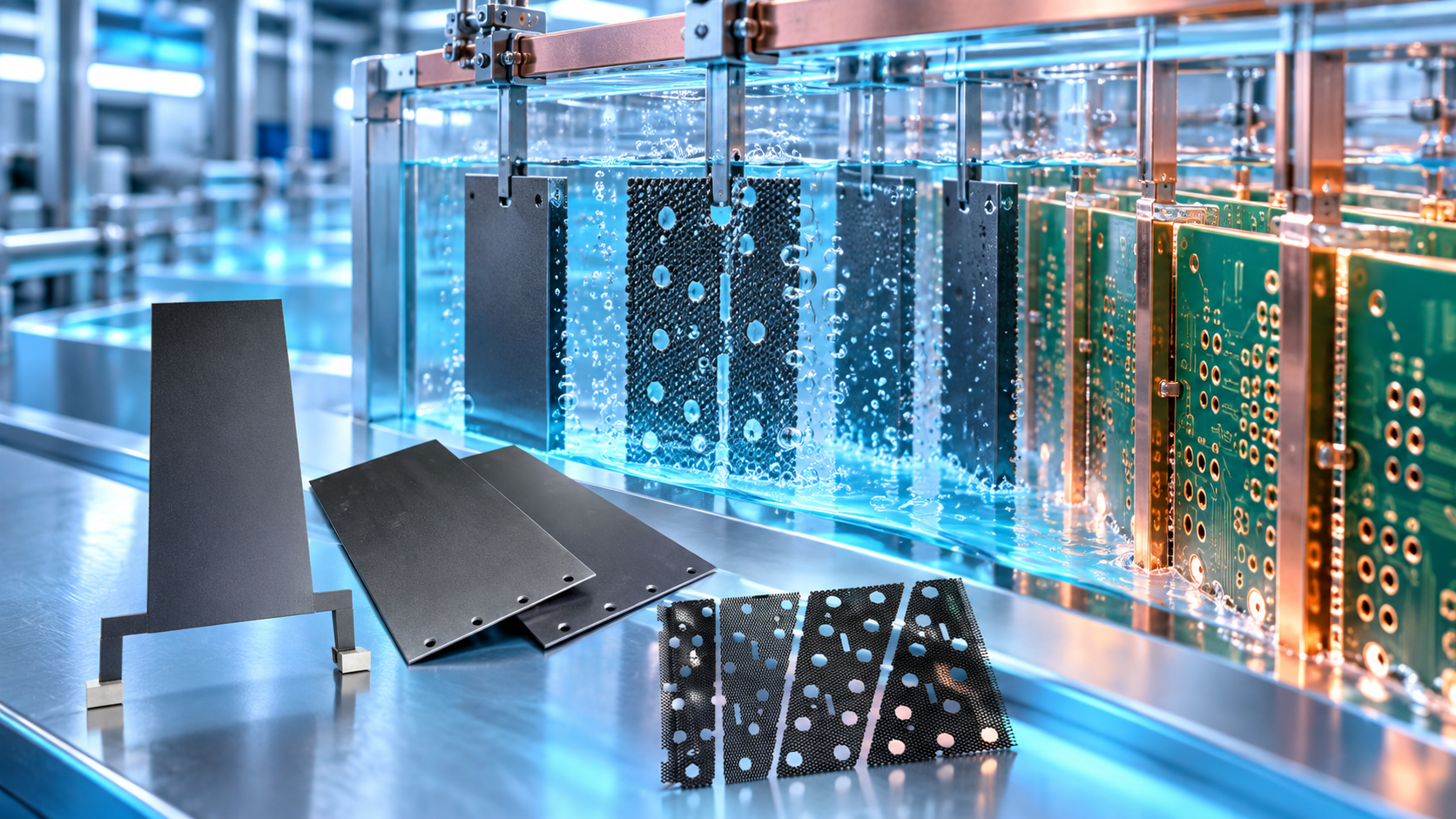
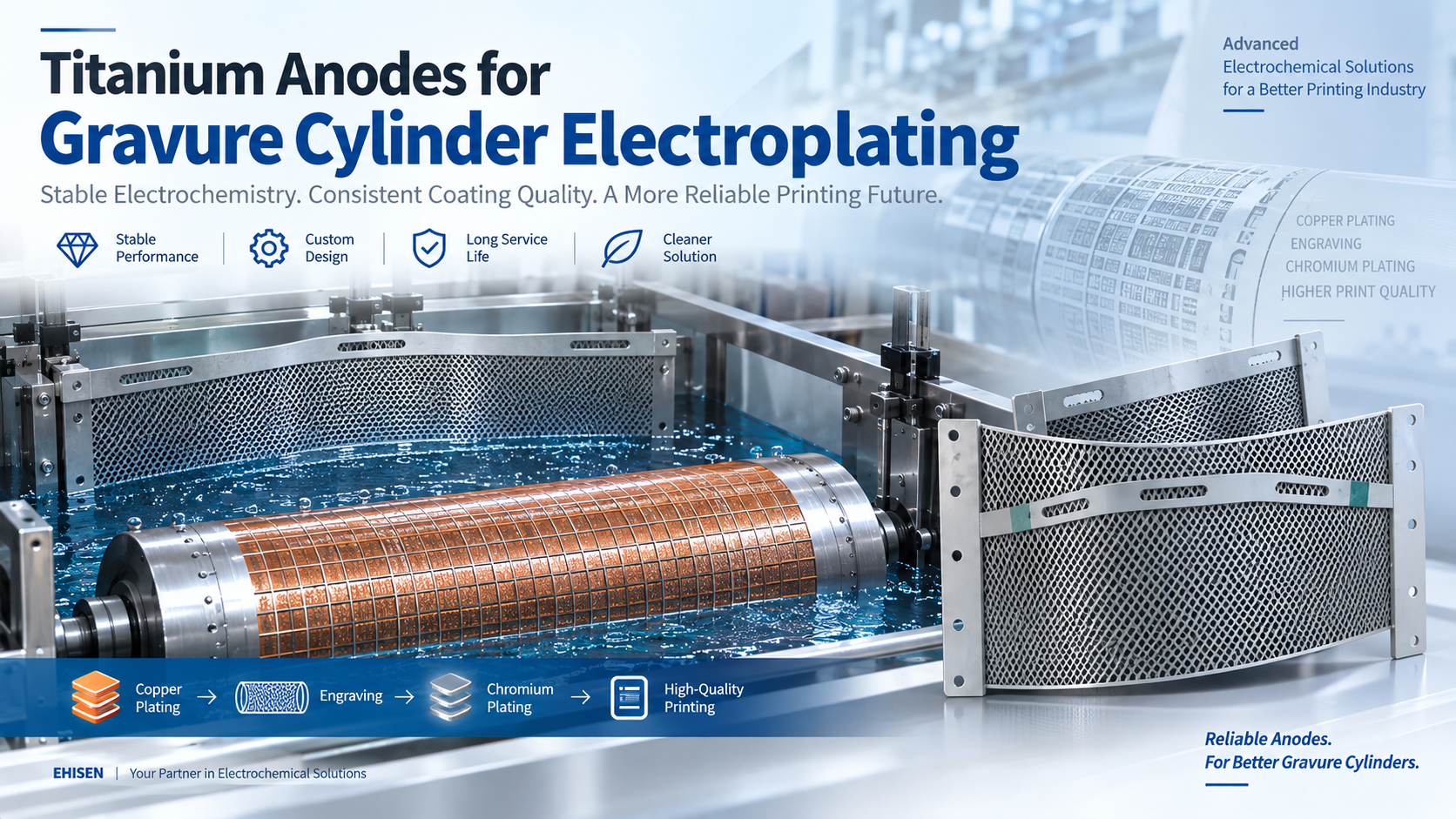
Titanium anodes are widely used in electrochemical industries due to their excellent corrosion resistance, high catalytic activity, and long service life. By applying advanced coatings such as iridium–tantalum mixed metal oxide (MMO) or platinum, titanium anodes can maintain stable performance in harsh chemical environments and under high current density conditions. They are commonly used in chlor-alkali production, electrochemical oxidation, wastewater treatment, and other industrial electrolysis processes, providing durable and energy-efficient electrode solutions.
Applications in Chlor-Alkali Production, Electro-Oxidation, and Industrial Electrolysis
Industrial electrochemical processes operate under some of the most aggressive chemical conditions. High current density, strong electrolytes, and continuous operation place extreme demands on electrode materials. Traditional anodes such as graphite and lead-based electrodes often suffer from corrosion, structural degradation, and unstable electrochemical performance.

These limitations have led to the widespread adoption of titanium anodes, particularly mixed metal oxide (MMO) coated titanium anodes and platinum-coated titanium anodes. These advanced electrodes provide exceptional corrosion resistance, catalytic activity, and long operational lifetimes, even in highly aggressive chemical environments.
Today, titanium anodes are widely used in industries such as chlor-alkali production, electrochemical oxidation, wastewater treatment, metal electrowinning, and electro-organic synthesis.
Titanium anodes are corrosion-resistant electrodes consisting of a titanium substrate coated with catalytic materials such as iridium-tantalum oxide or platinum. These coatings enable efficient electrochemical reactions, low overpotential, and long service life under high current density and aggressive chemical environments. As a result, titanium anodes have become the preferred choice for modern industrial electrolysis systems.
In this article, we explore how titanium anodes work, why they perform exceptionally well in harsh chemical environments, and how they are used across multiple electrochemical industries.
What Is a Titanium Anode?
A titanium anode is an electrochemical electrode made from a titanium substrate coated with catalytic materials that facilitate oxidation reactions.
The base metal, titanium, provides excellent structural strength and corrosion resistance. However, pure titanium itself has limited electrochemical catalytic activity. To overcome this limitation, the surface is coated with specialized catalytic layers.

Common coating materials include:
Iridium oxide (IrO₂)
Tantalum oxide (Ta₂O₅)
Ruthenium oxide (RuO₂)
Platinum (Pt)
These coatings dramatically improve electrochemical performance by reducing reaction overpotential and enhancing catalytic efficiency.
The combination of a titanium substrate and catalytic coatings results in a highly durable electrode capable of operating under extreme industrial conditions.
According to research published in Electrochimica Acta, mixed metal oxide coatings significantly improve electrode stability and catalytic activity in electrochemical oxidation reactions (Trasatti, Electrochimica Acta).
What Is a Dimensionally Stable Anode (DSA)?
The concept of the dimensionally stable anode (DSA) revolutionized the electrochemical industry.

DSA technology was first introduced in the 1960s by Henri Beer. The innovation involved coating titanium substrates with noble metal oxides to create highly durable electrodes that maintain their physical dimensions during electrolysis.
Unlike traditional graphite anodes, which gradually dissolve or degrade during operation, DSAs maintain their structural integrity over long periods.
Key characteristics of dimensionally stable anodes include:
● Excellent corrosion resistance
● Low chlorine evolution overpotential
● Long operational lifetime
● Stable geometric structure
● High current efficiency
Because of these advantages, DSAs rapidly replaced graphite anodes in chlor-alkali electrolysis systems worldwide.
According to Ullmann’s Encyclopedia of Industrial Chemistry, modern chlor-alkali plants almost exclusively use dimensionally stable titanium anodes due to their superior efficiency and durability.
Why Titanium Is Ideal for Harsh Chemical Environments
Titanium has become one of the most widely used metals in electrochemical engineering due to its outstanding chemical stability.
One of the key reasons for this stability is the formation of a protective oxide layer.
When exposed to oxygen, titanium spontaneously forms a thin layer of titanium dioxide (TiO₂) on its surface. This passive film protects the underlying metal from corrosion.

Key advantages of titanium in chemical environments include:
Exceptional Corrosion Resistance
Titanium exhibits remarkable resistance to corrosion in environments containing:
Chlorides
Seawater
Strong oxidizers
Many acidic solutions
According to the ASM Materials Handbook, titanium can maintain structural integrity even in highly corrosive environments where many metals fail.
High Strength-to-Weight Ratio
Titanium provides high mechanical strength while remaining relatively lightweight compared to other industrial metals.
This allows the fabrication of large electrode structures without excessive weight.
Thermal Stability
Titanium remains stable under elevated temperatures, making it suitable for industrial electrolysis systems that generate significant heat.
Compatibility with Catalytic Coatings
Titanium provides an ideal substrate for noble metal oxide coatings, ensuring strong adhesion and long coating lifetimes.
How Iridium–Tantalum Coatings Improve Anode Performance
One of the most widely used coating systems for industrial electrolysis is the iridium-tantalum mixed oxide coating.
These coatings offer several advantages for electrochemical reactions, particularly the chlorine evolution reaction (CER) and oxygen evolution reaction (OER).

Enhanced Catalytic Activity
Iridium oxide is a highly effective electrocatalyst. It significantly lowers the activation energy required for oxidation reactions.
This improves the efficiency of electrochemical systems and reduces energy consumption.
Improved Coating Stability
Tantalum oxide is often added to improve the structural stability of the coating.
The combination of IrO₂ and Ta₂O₅ results in coatings that maintain catalytic activity even under prolonged high current density conditions.
Research published in Journal of Applied Electrochemistry shows that Ir-Ta oxide coatings provide excellent long-term stability during chlorine evolution reactions.
Lower Overpotential
Lower overpotential means that electrochemical reactions occur more easily, reducing electrical energy consumption in industrial electrolysis systems.
This is particularly important for energy-intensive processes such as chlor-alkali production.
Platinum-Coated Titanium Anodes in Electrochemical Systems
Another important category of titanium electrodes used in industrial electrochemical systems is the platinum-coated titanium anode. These electrodes combine the structural stability of titanium with the outstanding catalytic properties of platinum, making them highly effective for a wide range of electrochemical reactions.

Platinum is widely recognized as one of the most efficient catalytic materials in electrochemistry. Due to its unique electronic structure and strong resistance to corrosion, platinum can significantly enhance the kinetics of oxidation reactions occurring at the anode surface. When deposited onto a titanium substrate, platinum forms a highly conductive and chemically stable electrode system capable of operating under demanding electrochemical conditions.
The key advantages of platinum-coated titanium anodes include:
● High electrical conductivity, which facilitates efficient electron transfer during electrochemical reactions
● Exceptional catalytic activity, enabling faster reaction kinetics and lower energy consumption
● Outstanding chemical stability, even in strongly acidic or oxidizing environments
● Low overpotential for oxygen evolution and oxidation reactions, improving overall electrochemical efficiency
Because of these properties, platinum-coated titanium anodes are widely used in specialized electrochemical processes such as:
● electro-organic synthesis
● electroplating and metal finishing systems
● electrochemical sensing and analytical devices
● electrochemical oxidation and advanced oxidation processes
In industrial production, the platinum layer is typically deposited onto the titanium substrate using techniques such as electroplating, thermal decomposition, or physical vapor deposition (PVD). These methods ensure strong metallurgical bonding between the platinum layer and the titanium base while maintaining uniform coating thickness and high surface activity.
The thickness of the platinum coating is usually controlled within the range of 0.5–5 μm, depending on the application requirements. Precise control of coating thickness is critical because it directly influences catalytic performance, durability, and cost efficiency.
According to electrochemical studies published in Electrochemical Society Proceedings, platinum electrodes demonstrate excellent catalytic activity for oxidation reactions due to their ability to facilitate electron transfer and reduce reaction overpotential. These characteristics make platinum-coated titanium anodes particularly valuable in electrochemical systems that require high reaction efficiency and long-term operational stability.
Titanium Anodes in Chlor-Alkali Production
One of the most important industrial applications of titanium anodes is in the chlor-alkali industry, which represents one of the largest electrochemical manufacturing sectors in the world.

The chlor-alkali process involves the electrolysis of sodium chloride (brine) solution to produce three fundamental industrial chemicals:
● Chlorine gas (Cl₂)
● Hydrogen gas (H₂)
● Sodium hydroxide (NaOH)
These products serve as essential raw materials for numerous industrial sectors, including:
● plastics and polymer manufacturing
● water disinfection and treatment
● pharmaceutical and chemical synthesis
● pulp and paper bleaching
● textile and detergent production
The electrochemical reaction occurring during the electrolysis of sodium chloride solution can be expressed as:

During this process:
● Chlorine gas is generated at the anode through chloride ion oxidation
● Hydrogen gas is produced at the cathode through water reduction
The anodic reaction is:

Because the chlor-alkali process operates in highly corrosive chloride environments, the electrode material must withstand aggressive chemical conditions while maintaining high catalytic efficiency.
Modern chlor-alkali plants rely almost exclusively on dimensionally stable anodes (DSA) based on titanium substrates coated with mixed metal oxides such as ruthenium oxide and iridium oxide. These coatings provide excellent catalytic performance for the chlorine evolution reaction.
MMO titanium anodes used in chlor-alkali electrolysis offer several important advantages:
● Low chlorine evolution overpotential, reducing energy consumption
● Excellent corrosion resistance in chloride-rich environments
● High current efficiency and stable chlorine production
● Long operational lifetime compared with graphite electrodes
According to data from the International Energy Agency (IEA), the introduction of dimensionally stable anodes significantly improved the energy efficiency of chlor-alkali electrolysis. Modern membrane cell technology combined with MMO titanium anodes can reduce electricity consumption by up to 30% compared with older graphite-based systems.
As a result, titanium anodes have become a key enabling technology for the modernization and sustainability of the chlor-alkali industry.
Titanium Anodes for Electro-Oxidation and Wastewater Treatment
Electrochemical oxidation has emerged as a powerful and environmentally friendly technology for advanced wastewater treatment. This process uses electrochemical reactions to degrade organic contaminants, pathogens, and toxic compounds present in industrial wastewater.
In electro-oxidation systems, titanium anodes act as catalytic surfaces where oxidation reactions occur. When an electrical current is applied, water molecules and dissolved ions are converted into highly reactive oxidizing species.

Important oxidants generated during electrochemical oxidation include:
● Hydroxyl radicals (•OH)
● Active chlorine species (Cl₂, HOCl, OCl⁻)
● Ozone and peroxide intermediates
Among these oxidants, hydroxyl radicals are particularly important because they possess extremely high oxidation potential (approximately 2.8 V vs. SHE), allowing them to rapidly break down complex organic molecules.
These reactive species can degrade a wide variety of pollutants, including:
● dyes and textile chemicals
● pharmaceutical residues
● pesticides and herbicides
● petrochemical contaminants
● phenols and aromatic compounds
Research published in the journal Water Research has demonstrated that electrochemical oxidation systems can achieve significant reductions in key wastewater parameters such as:
● Chemical Oxygen Demand (COD)
● Ammonia nitrogen (NH₃-N)
● Total organic carbon (TOC)
● Persistent organic pollutants (POPs)
MMO titanium anodes are particularly suitable for electro-oxidation processes due to several critical properties:
● high catalytic efficiency for oxygen evolution reactions
● excellent resistance to chemical fouling and scaling
● long operational lifetime in aggressive wastewater environments
● stable performance under continuous operation
Because of these advantages, electrochemical oxidation using titanium anodes has become an increasingly important technology in industries such as chemical manufacturing, pharmaceuticals, textile dyeing, and landfill leachate treatment.
Performance Under High Current Density
Industrial electrolysis systems frequently operate under high current density conditions, which impose significant electrochemical and thermal stress on electrode materials.

Current density refers to the amount of electrical current passing through a unit area of the electrode surface and is typically expressed in kA/m².
Typical operating ranges include:
2–5 kA/m² for many electrochemical oxidation processes
5–10 kA/m² in large-scale industrial electrolysis systems
even higher current densities in specialized electrochemical reactors
Operating at high current density is desirable because it increases production rates and improves process efficiency. However, it also accelerates electrode degradation if the material is not sufficiently stable.
MMO titanium anodes are specifically engineered to maintain structural and electrochemical stability under these demanding conditions.
Several design factors contribute to their high current density tolerance:
Strong Coating Adhesion
Advanced thermal decomposition coating techniques create strong bonding between the mixed metal oxide layer and the titanium substrate. This prevents coating delamination during long-term electrolysis.
High Catalytic Activity
The catalytic properties of noble metal oxides allow electrochemical reactions to occur efficiently at lower overpotentials, reducing energy loss and heat generation.
Uniform Coating Distribution
Uniform coating thickness ensures consistent current distribution across the electrode surface, minimizing localized hotspots and preventing premature degradation.
According to research published by the Electrochemical Society, properly engineered MMO-coated titanium anodes can maintain stable electrochemical performance for thousands of operating hours under high current density conditions without significant loss of catalytic activity.
This durability makes titanium anodes particularly suitable for continuous industrial processes where reliability and long service life are critical operational requirements.
Service Life of MMO Titanium Anodes
One of the most important advantages of titanium anodes is their long service life.

Under typical industrial conditions, MMO titanium anodes can operate for 5–10 years or longer.
Several factors influence electrode lifetime:
Electrolyte Composition
Highly acidic or highly alkaline electrolytes may accelerate coating degradation.
Current Density
Higher current density increases electrochemical stress on the coating.
Operating Temperature
Elevated temperatures may increase reaction rates and coating wear.
Coating Thickness
Proper coating thickness is essential for long-term stability.
According to industry reports and electrochemical studies, well-engineered MMO coatings provide significantly longer lifetimes compared with conventional electrode materials.
Titanium Anodes vs Traditional Graphite Anodes
Before the development of dimensionally stable anodes, graphite electrodes were widely used in electrochemical industries.
However, graphite electrodes suffer from several limitations.
| Property | Titanium Anode | Graphite Anode |
|---|---|---|
| Corrosion resistance | Excellent | Moderate |
| Service life | 5–10 years | 6–12 months |
| Current efficiency | High | Lower |
| Structural stability | Excellent | Fragile |
| Energy efficiency | Higher | Lower |
Because of these advantages, titanium anodes have largely replaced graphite electrodes in modern electrochemical plants.
Key Factors When Selecting Titanium Anodes for Chemical Electrolysis
When selecting titanium anodes for industrial applications, several factors should be carefully evaluated.
Coating Type
Different coatings are optimized for different reactions.
Examples include:
● Iridium-tantalum coatings for oxygen evolution
● Ruthenium coatings for chlorine evolution
● Platinum coatings for specialized electrochemical reactions
Current Density Requirements
The electrode must be designed to withstand the operating current density of the system.
Electrolyte Conditions
Electrolyte composition strongly influences coating performance and electrode lifetime.
Electrode Geometry
Common electrode forms include:
● titanium mesh anodes
● plate anodes
● tubular anodes
● rod anodes
Proper design ensures uniform current distribution and optimal electrochemical performance.
EHISEN Titanium Anodes for Industrial Chemical Applications
As electrochemical industries continue to evolve, the demand for reliable and durable anode materials continues to grow.
EHISEN specializes in the development and manufacturing of high-performance titanium anodes designed for industrial electrolysis systems.
The company provides advanced anode solutions for applications including:
● chlor-alkali production
● electrochemical oxidation
● wastewater treatment
● electroplating
● cathodic protection systems
Key features of EHISEN titanium anodes include:
● precision coating technology
● uniform catalytic layer distribution
● excellent dimensional stability
● high current density tolerance
● long service life in aggressive chemical environments
More information about EHISEN titanium anode solutions can be found at:
By combining advanced coating technology with strict quality control processes, EHISEN aims to provide reliable electrode solutions for modern electrochemical industries.
Frequently Asked Questions About Titanium Anodes
01.How long do titanium anodes last?
Depending on operating conditions, MMO titanium anodes typically last between 5 and 10 years in industrial electrolysis systems.
02.What coating is best for chlor-alkali electrolysis?
Ruthenium-based mixed metal oxide coatings are widely used because they provide excellent catalytic activity for chlorine evolution reactions.
03.Can titanium anodes operate in acidic electrolytes?
Yes. Titanium anodes exhibit strong corrosion resistance in many acidic environments, especially when protected with catalytic coatings.
04.What industries use titanium anodes?
Titanium anodes are used in many industries including:
● chlor-alkali production
● electrochemical wastewater treatment
● metal electrowinning
● electroplating
● cathodic protection
Conclusion
Titanium anodes have become indispensable components in modern electrochemical industries. Their combination of corrosion resistance, catalytic efficiency, and structural stability makes them ideal for operation in harsh chemical environments.
With advanced coating technologies such as iridium-tantalum oxide and platinum, titanium anodes provide reliable performance even under high current density conditions.
From chlor-alkali production to wastewater treatment and advanced electrochemical processes, these electrodes continue to play a critical role in improving efficiency and sustainability in industrial electrolysis systems.
As industries continue to seek more durable and energy-efficient electrode materials, titanium anodes are expected to remain at the forefront of electrochemical engineering innovation.