
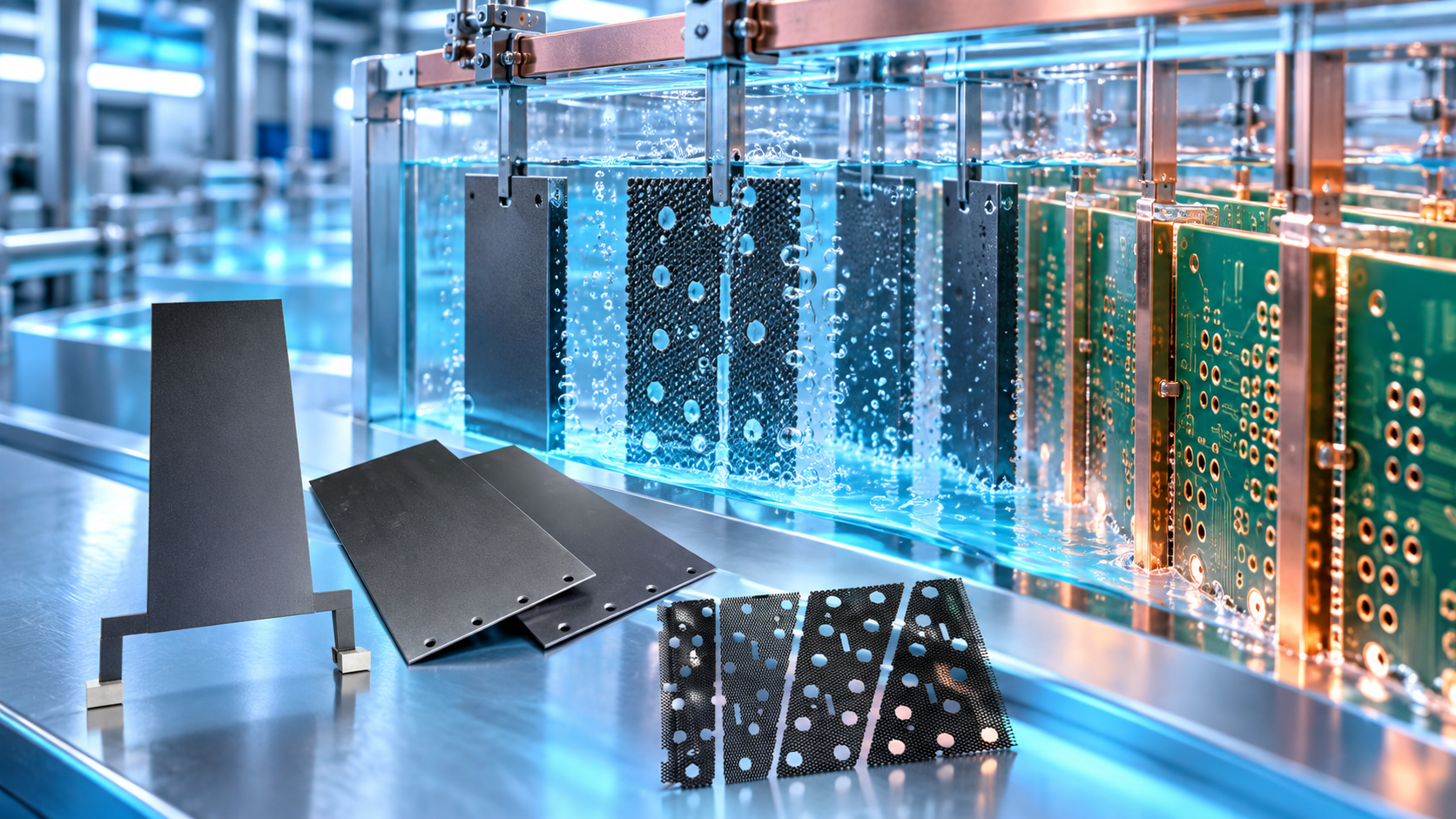
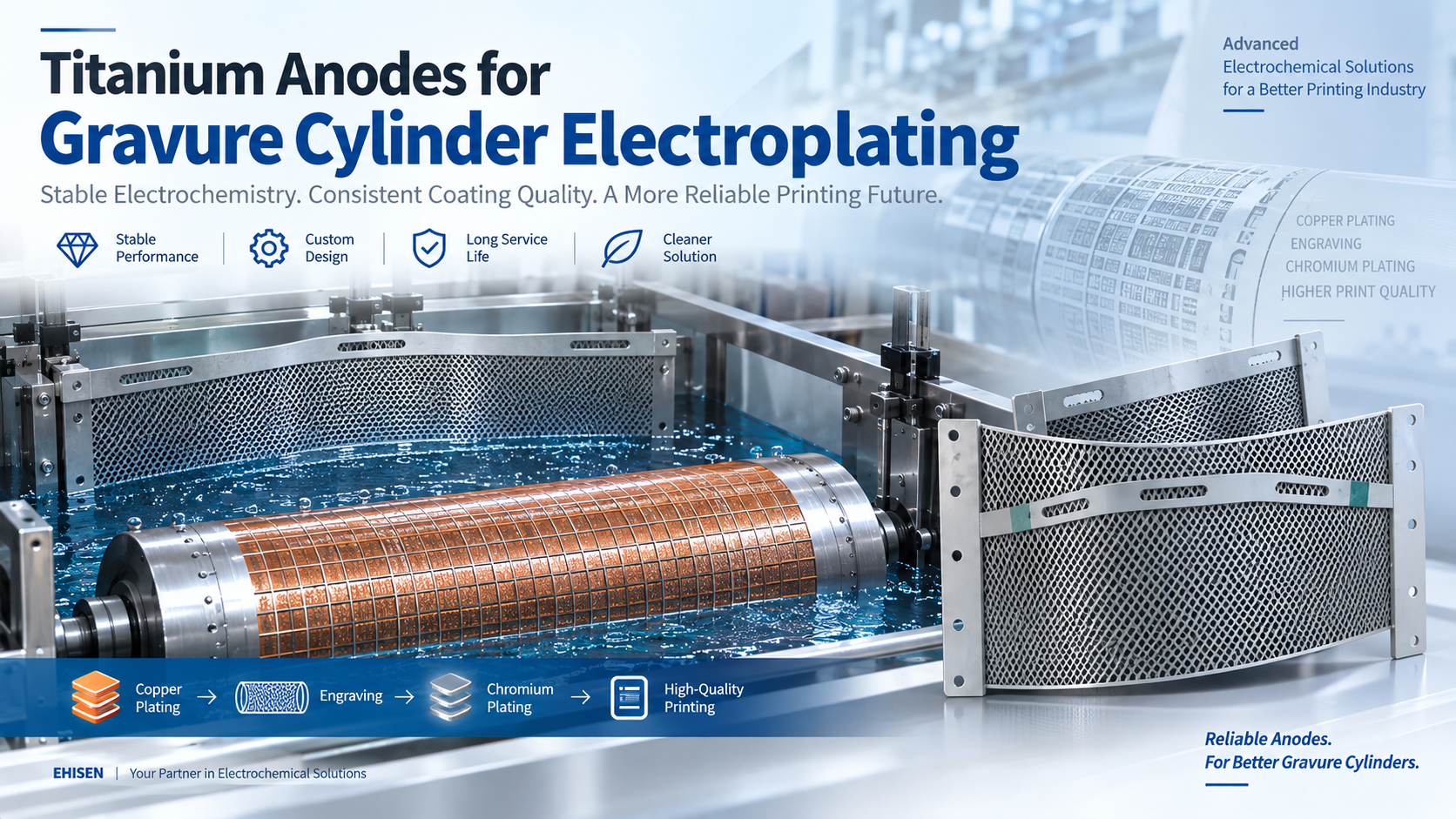
Introduction: Core Value and Selection Logic of Titanium Anode Coating Systems

I. Core Coating Systems: Characteristics and Chemical Fundamentals
The selection of a coating system is, in essence, the pursuit of an optimal balance between activity, stability, and cost, based on the catalytic demands of the target electrochemical reaction (such as oxygen or chlorine evolution) and the corrosiveness of the electrolyte.
| Coating System | Core Oxides | Typical Atomic Ratio | Primary Electrochemical Reaction | Key Characteristics | Optimal Application Environment |
|---|---|---|---|---|---|
| Ru-Ir Series (Chlorine-Evolving) | RuO₂, IrO₂ | Ru:Ir = 3:7 to 7:3 | Chlorine Evolution Reaction (CER) | Very low chlorine evolution potential (<1.13V), high catalytic activity, relatively manageable cost. | Chloride-ion environments (brine, seawater, HCl) |
| Ir-Ta Series (Oxygen-Evolving) | IrO₂, Ta₂O₅ | Ir:Ta = 7:3 to 3:7 | Oxygen Evolution Reaction (OER) | Excellent OER stability in acidic environments; coating is robust and durable. | Acidic, highly oxidizing environments (sulfuric acid, nitric acid, PEM electrolysis) |
| Platinum (Pt) Coating | Pt (metallic state) | — | OER / CER (Universal) | Best conductivity, low overpotential, but pure Pt coating can degrade easily under vigorous oxygen evolution. | Low-current precision electroplating, research, specific high-value electrochemical synthesis |
| Multi-component Composite Coatings | Ru-Ir-Ta, Ru-Ir-Pt-Ti, etc. | Customized as needed | OER / CER (Enhanced) | Balances properties through element doping. Ta enhances lifespan, Pt suppresses side reactions. | Severe operating conditions (high temperature, high current density, complex media) |
The Scientific Nature of Coating Failure: The failure of all coatings originates from either the electrochemical dissolution of the active components or the formation of non-active oxides (such as TiO₂) leading to “passivation.” Therefore, choosing a compatible coating means selecting the pathway with the slowest failure rate.
II. Corrosion/Cathodic Protection Engineers (Persona A): Environment Adaptation and Long-term Protection Solutions
(I) Comparison of Typical Coating Systems and Environment Adaptation
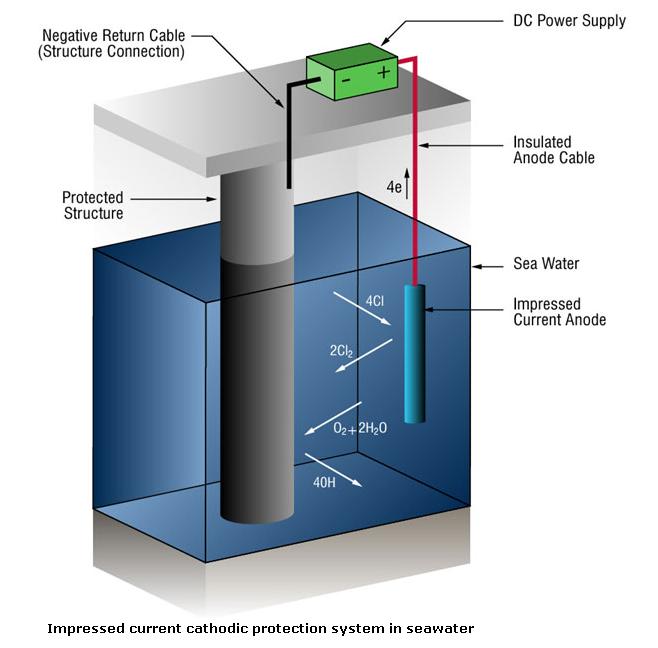
For corrosion/cathodic protection engineers, the core demand is to realize long-term and stable cathodic protection of metal structures in complex and harsh environments (such as soil, concrete, marine, etc.), and avoid safety accidents and economic losses caused by corrosion failure. The key to meeting this demand is to select a coating system that can adapt to the characteristics of the service environment and has excellent long-term corrosion resistance. The following will focus on comparing the two most commonly used coating systems (Ru-Ir coating and Ir-Ta coating) and their adaptation to different environments.
1. Ru-Ir Coating: Cost-effective Choice for Soil and Concrete Environments

At the same time, the Ru-Ir coating has a dense crystal structure, which can effectively prevent the electrolyte from penetrating into the titanium substrate, avoid the passivation of the titanium substrate caused by the reaction with the electrolyte, and ensure the long-term stable operation of the anode. In practical engineering applications, the selection of Ru-Ir coating needs to pay attention to matching the coating loading and current density with the soil resistivity. For example, in soil with high resistivity (30-50Ω·m), it is necessary to appropriately increase the coating loading (usually 8-12g/㎡) to ensure the catalytic activity and service life of the anode. Case data shows that in the cathodic protection project of a buried oil pipeline in the Middle East, the Ru-Ir coating titanium anode selected has been operating stably for more than 10 years, and the corrosion rate of the pipeline is always controlled below 0.01mm/year, which is far lower than the national standard limit (0.05mm/year), significantly reducing the maintenance cost of the pipeline and extending the service life of the pipeline.
2. Ir-Ta Coating: “Corrosion Resistance Elite” for Marine and High-salt Environments

Compared with soil and concrete environments, marine and high-salt environments have more harsh corrosion conditions: high chloride ion concentration (usually more than 30,000ppm), strong corrosiveness of seawater, and accompanied by factors such as wave impact, marine organism attachment, and alternating dry and wet, which put forward higher requirements for the corrosion resistance and stability of titanium anode coatings. Ir-Ta coating is a binary oxide coating composed of iridium oxide and tantalum oxide loaded on a titanium substrate. It has extremely high oxygen evolution potential (up to 1.6V vs SHE) and excellent chemical stability, making it a “corrosion resistance elite” suitable for marine and high-salt environments.
The high oxygen evolution potential of Ir-Ta coating can effectively avoid the oxidative decomposition of the coating itself in the marine environment, reduce the corrosion rate of the coating, and ensure the long-term stability of the anode. At the same time, the tantalum oxide in the coating has a strong ability to form a passive film, which can further enhance the corrosion resistance of the coating and resist the erosion of corrosive substances in seawater (such as chloride ions, sulfate ions, etc.). In the cathodic protection of offshore platforms, offshore wind power pile foundations and other marine structures, Ir-Ta coating titanium anodes can not only provide stable cathodic protection current, but also resist the impact of waves and the attachment of marine organisms, ensuring the safety and reliability of marine structures. For example, in the cathodic protection project of an offshore wind farm in Europe, the Ir-Ta coating titanium anodes used have been operating stably for more than 8 years, with a potential fluctuation range of less than 5mV, which fully meets the long-term cathodic protection requirements of offshore wind power pile foundations. In addition, the design of Ir-Ta coating titanium anodes in marine environments also needs to pay attention to the rational layout of the anode to ensure uniform current distribution; at the same time, the coating thickness should be strictly controlled (usually 15-20μm) to avoid coating damage caused by wave impact.
(II) Key Technical Parameter Design and Verification Methods
-
Service Life Calculation Model: The service life of titanium anodes is mainly determined by the consumption rate of the active components in the coating. Based on Faraday’s law of electrolysis, the service life calculation model of titanium anodes can be derived: Service life (years) = (Total mass of active substances in the coating × Faraday constant) / (Current density × Anode surface area × Time conversion factor × Valence state of active substances). Among them, the total mass of active substances in the coating = Coating loading (g/㎡) × Anode surface area (㎡); Faraday constant is 96485C/mol; the time conversion factor is 365×24×3600 (converting seconds to years); the valence state of active substances (such as Ru⁴+, Ir⁴+) is usually 4. For example, for a Ru-Ir coating titanium anode with a coating loading of 5g/㎡, an anode surface area of 1㎡, and a working current density of 8A/㎡, the calculated service life is (5×1×96485)/(8×1×365×24×3600×4) ≈ 18 years. This model can provide a scientific basis for the selection and design of titanium anodes in engineering, but it should be noted that the actual service life will be affected by factors such as the uniformity of the coating, the composition of the electrolyte, and the fluctuation of the working current, so appropriate safety margins need to be considered in the design (usually 1.2-1.5 times the calculated service life).
- Long-term Performance Verification Method: To ensure the long-term stability of titanium anodes in actual service environments, it is necessary to carry out long-term performance verification through accelerated corrosion tests and on-site burial tests. The accelerated corrosion test simulates the harsh service environment (such as high temperature, high concentration electrolyte, high current density) in the laboratory, and evaluates the performance degradation law of the anode in a short time. For example, the salt spray accelerated corrosion test (in accordance with ASTM B117 standard) can simulate the marine high-salt environment, and observe the changes in the coating’s appearance, potential, and corrosion rate of the anode after a certain period of time; the accelerated electrolysis test can simulate the long-term working state of the anode under the design current density, and evaluate the service life of the anode by measuring the consumption rate of the active components in the coating. The on-site burial test is to bury the titanium anode in the actual service environment (such as the soil or seawater of the project site), and track and monitor the anode’s potential, current output, and coating integrity regularly (such as every 6 months, 1 year, 3 years). The on-site burial test can most truly reflect the performance of the anode in the actual environment. Generally, it is required that the potential decay rate of the anode after 3 years of on-site operation is less than 5%/year, and the coating has no obvious peeling, cracking, or corrosion, which can be considered to meet the long-term performance requirements. In addition, during the verification process, it is also necessary to detect the composition of the electrolyte around the anode to avoid the accumulation of harmful ions (such as fluoride ions) that may accelerate the corrosion of the titanium substrate.
|
Coating System
|
Applicable Environment
|
Core Performance Indicators
|
Key Design Parameters
|
Advantages
|
|
Ru-Ir Coating
|
Neutral to weakly alkaline soil, concrete environment (soil resistivity ≤50Ω·m)
|
Chlorine evolution overpotential ≤0.15V; corrosion rate ≤0.01mm/year; potential fluctuation range ≤10mV
|
Coating loading 5-12g/㎡; working current density 2-10A/㎡; coating thickness 10-15μm
|
High cost-effectiveness; excellent chlorine evolution catalytic activity; can inhibit titanium substrate passivation; suitable for most soil and concrete cathodic protection scenarios
|
|
Ir-Ta Coating
|
Marine environment, high-salt environment (chloride ion concentration >30,000ppm)
|
Oxygen evolution potential ≥1.6V; corrosion rate ≤0.005mm/year; potential fluctuation range ≤5mV
|
Coating loading 8-15g/㎡; working current density 5-15A/㎡; coating thickness 15-20μm
|
Extremely strong corrosion resistance; high stability in high-salt environment; can resist wave impact and marine organism attachment; long service life
|
III. Electroplating/PCB/Copper Foil Process Engineers (Persona B): Precision Control and Efficiency Optimization Strategies
(I) Core Impact of Coating Systems on Coating Quality
For electroplating/PCB/copper foil process engineers, the core demand is to ensure the uniformity and consistency of the electroplated layer, improve electroplating efficiency and product yield, and at the same time meet the environmental protection requirements of the production process. The performance of the titanium anode coating directly affects the current distribution during the electroplating process, the catalytic activity of the electrode reaction, and the purity of the electroplated layer, thus determining the quality of the final electroplated product. The following will focus on analyzing the impact of two typical coating systems (Ru-Ir-Ta composite coating and Pt coating) on electroplating quality and their application scenarios.
1. Ru-Ir-Ta Composite Coating: Uniformity Guarantee for High-Density Electroplating

The reason why the Ru-Ir-Ta composite coating can achieve uniform current distribution is that its unique nanoscale grain boundary structure can reduce the resistance of the electrode surface and make the current evenly distributed on the entire electrode surface, thereby avoiding the “edge effect” (the phenomenon that the current density at the edge of the workpiece is higher than that in the middle, resulting in uneven thickness of the electroplated layer) that is easy to occur in traditional electroplating. At the same time, the Ru and Ir components in the coating provide high electrocatalytic activity, which can accelerate the electrode reaction rate, improve electroplating efficiency, and reduce the electroplating time; the Ta component enhances the stability of the coating, avoids the dissolution of the coating during the electroplating process, and ensures the purity of the electroplated layer. In the actual production of PCB VCP lines, the use of Ru-Ir-Ta composite coating titanium anodes can make the thickness error of the electroplated layer of PCB fine lines controlled within ±3%, and the yield rate of products is increased by more than 10% compared with traditional lead anodes. In the production of electrolytic copper foil, the Ru-Ir-Ta composite coating titanium anode can reduce the roughness of the copper foil surface (Ra ≤0.3μm) and improve the uniformity of the copper foil thickness, which meets the requirements of high-end electronic products for copper foil quality.
2. Pt Coating: Precious Metal Electroplating and Hard Chromium Replacement Solution

(II) Structural Design and Process Parameter Matching
|
Coating System
|
Core Application Scenarios
|
Impact on Coating/Process
|
Structural Design Requirements
|
Core Advantages
|
|
Ru-Ir-Ta Composite Coating
|
PCB vertical continuous electroplating (VCP), electrolytic copper foil production, fine line electroplating
|
Ensure uniform current distribution; reduce coating thickness error (≤±3%); improve electroplating efficiency (increase by 10-20%); reduce coating roughness (Ra ≤0.3μm)
|
PCB electroplating: porous titanium plate (porosity 30-50%), thickness 2-3mm; electrolytic copper foil: mesh anode (mesh size 20-50 mesh), thickness 0.8-1.2mm; coating loading 8-15g/㎡
|
Excellent current distribution uniformity; high catalytic activity; good stability; suitable for high-density electroplating scenarios; high cost-effectiveness
|
|
Pt Coating
|
Precious metal electroplating (gold plating, rhodium plating), hard chromium replacement (trivalent chromium plating)
|
Ensure high purity of electroplated layer (≥99.99%); eliminate lead pollution (meet RoHS/REACH standards); reduce tank voltage (energy saving by 15-20%)
|
Sheet anode, thickness 1-2mm; surface polishing; coating loading 0.5-1g/㎡; PVD/CVD preparation process
|
Extremely high chemical stability; no dissolution during electroplating; environmental protection and compliance; high electrocatalytic activity; suitable for high-end electroplating scenarios
|
IV. Water Treatment/EDI/Functional Water System Engineers (Persona C): Production-Efficiency Balance and Regulatory Compliance Solutions
(I) Key Points for Coating Selection in Disinfection and Purification Scenarios
For water treatment/EDI/functional water system engineers, the core demand is to realize efficient disinfection or water purification, ensure that the effluent water quality meets the relevant national standards (such as GB 5749《Drinking Water Health Standard》, GB/T 11446《Electronic Grade Water Quality Standard》), and at the same time control the energy consumption and operating cost of the water treatment system. The performance of the titanium anode coating directly affects the efficiency of the water treatment process (such as chlorine production efficiency, ion removal efficiency), energy consumption level, and water quality safety. The following will focus on analyzing the key points of coating selection in two typical scenarios (disinfection and EDI ultrapure water preparation) and the application of corresponding coating systems (Ru-Ir-Sn coating and Ir-Ta coating).
1. Ru-Ir-Sn Coating: Efficiency Benchmark for Sodium Hypochlorite Generators

The Ru-Ir components in the Ru-Ir-Sn coating have high electrocatalytic activity for chlorine evolution reaction, which can efficiently catalyze the oxidation of chloride ions in the sodium chloride solution to generate chlorine gas, and then react with water to generate sodium hypochlorite. The chlorine evolution efficiency of the Ru-Ir-Sn coating can reach more than 95%, which is significantly higher than that of traditional graphite anodes (about 70%). The Sn component in the coating can enhance the stability of the coating, reduce the dissolution rate of the coating, and avoid the secondary pollution of water quality caused by the dissolution of heavy metal ions (such as Ru, Ir). At the same time, the Ru-Ir-Sn coating has low chlorine evolution overpotential, which can reduce the electrolysis voltage of the sodium hypochlorite generator, reduce energy consumption by more than 20% compared with traditional graphite anodes, and significantly reduce the operating cost of the water treatment system. In the actual application of a large-scale drinking water treatment plant, the use of Ru-Ir-Sn coating titanium anodes in sodium hypochlorite generators can make the residual chlorine content in the effluent water stable at 0.3-0.5mg/L (meeting GB 5749 standards), and the unit chlorine production energy consumption is only 2.5kWh/kg Cl₂, which is far lower than the national average level (3.5kWh/kg Cl₂). In addition, the Ru-Ir-Sn coating can adapt to the fluctuation of sodium chloride solution concentration (5-20%) and temperature (5-40℃) in the actual water treatment process, ensuring the stable operation of the sodium hypochlorite generator.
2. Ir-Ta Coating: Compatibility Design for EDI Modules

(II) Water Quality Safety and Regulatory Compliance

2. Energy Consumption Optimization Methods: Energy consumption is an important part of the operating cost of the water treatment system. Optimizing the energy consumption of titanium anodes can effectively reduce the operating cost. The main methods of energy consumption optimization include: (1) Selecting a coating system with low overpotential (such as Ru-Ir-Sn coating for chlorine evolution, Ir-Ta coating for oxygen evolution), which can reduce the electrolysis voltage and thus reduce energy consumption. (2) Optimizing the structure and layout of titanium anodes, such as using porous anodes to increase the specific surface area of the anode, reduce the current density on the anode surface, and reduce the overpotential. (3) Controlling the operating parameters of the water treatment system, such as optimizing the electrolyte concentration (such as the concentration of sodium chloride solution in sodium hypochlorite generators), temperature, and flow rate, to ensure that the system operates under the optimal working conditions. (4) Regularly cleaning the surface of titanium anodes to remove dirt and scale on the surface, avoid increasing the resistance of the anode surface, and ensure the stable operation of the anode. For example, in a municipal sewage treatment plant, after optimizing the structure of Ru-Ir-Sn coating titanium anodes and operating parameters, the unit energy consumption of the disinfection system is reduced by 25%, and the annual energy saving cost is more than 1 million yuan.
|
Coating System
|
Core Application Scenarios
|
Key Performance Parameters
|
Compliance Indicators
|
Advantages
|
|
Ru-Ir-Sn Coating
|
Sodium hypochlorite generators, drinking water disinfection, swimming pool water disinfection, hospital wastewater disinfection
|
Chlorine evolution efficiency ≥95%; unit chlorine production energy consumption ≤2.5kWh/kg Cl₂; coating dissolution rate ≤0.001mg/(L·h)
|
Effluent water quality meets GB 5749; heavy metal ion content ≤0.001mg/L; no secondary pollution
|
High chlorine evolution efficiency; low energy consumption; good stability; no secondary pollution; suitable for various disinfection scenarios
|
|
Ir-Ta Coating
|
EDI modules, electronic ultra-pure water preparation, high-purity water treatment
|
Oxygen evolution stability: working voltage fluctuation ≤5mV; ion removal efficiency ≥99.9%; coating dissolution rate ≤0.0001mg/(L·h)
|
Effluent water quality meets GB/T 11446; metal ion content ≤1ppt; compatible with mainstream EDI module brands
|
Extremely high chemical stability; no impurity ion precipitation; stable operation; long service life; good compatibility with EDI modules
|
V. New Energy/Hydrogen Energy/Electrochemical R&D Engineers (Persona D): High Operating Condition Tolerance and Scale-up Design
(I) Selection of Coating Durability Under Extreme Operating Conditions
1. High Iridium Coating (Ir≥80%): Long-term Guarantee for PEM Electrolyzers

2. Ru-Ir Gradient Coating: Adaptation to Chlor-Alkali and Special Oxidation Processes

The design of Ru-Ir gradient coating adopts a “gradient composition” structure: the surface layer is iridium-rich (Ir≥70%), which has high oxygen evolution potential and chemical stability, and can resist the oxidative corrosion of the electrolyte, ensuring the stability of the coating surface; the bottom layer is ruthenium-rich (Ru≥60%), which has high chlorine evolution catalytic activity, and can efficiently catalyze the chlorine evolution reaction, improving the process efficiency. This gradient structure makes the coating have both excellent oxygen evolution stability and chlorine evolution catalytic activity, which can well adapt to the coexistence of oxygen evolution and chlorine evolution reactions in chlor-alkali electrolysis and lithium battery material oxidation processes. At the same time, the Ru-Ir gradient coating has high tolerance to high current density, which can operate stably under the condition of 1500A/㎡ current density, with a service life of more than 3 years. In the actual application of a lithium battery material manufacturer’s oxidation production line, the use of Ru-Ir gradient coating titanium anodes can make the oxidation rate of lithium battery materials increased by 30%, and the energy consumption per unit product is reduced by 20%, which significantly improves the production efficiency and reduces the production cost.
(II) Scale-up Strategy from Lab Scale to Engineering
2. Anode Structural Design Scale-up: The anode structure in the laboratory is usually small-sized (such as sheet anodes with a size of 5cm×5cm), which cannot meet the requirements of engineering large-scale equipment (such as PEM electrolyzers with a stack area of more than 1㎡) in terms of current distribution and electrolyte circulation. Therefore, it is necessary to carry out optimized design of the anode structure, such as adopting porous structures, mesh structures, and modular designs. Porous anode structure can increase the specific surface area of the anode, improve the current distribution uniformity, and reduce the concentration polarization of the electrode surface, which is suitable for PEM electrolyzers and other high current density scenarios. Mesh anode structure can facilitate the circulation of electrolyte, reduce the pressure drop of the system, and is suitable for chlor-alkali electrolysis and other flow electrolysis scenarios. Modular design can realize the assembly and replacement of large-area anodes, which is convenient for the maintenance and operation of engineering equipment. During the scale-up of the anode structure, it is necessary to carry out fluid simulation and electrical simulation to optimize the anode layout and structure parameters, ensure the uniform distribution of current and electrolyte, and avoid local overheating and uneven corrosion. For example, in the scale-up design of Ru-Ir gradient coating titanium anodes for chlor-alkali electrolyzers, the mesh anode structure (mesh size 30 mesh, thickness 1.5mm) is adopted, and the anode layout is optimized through fluid simulation, so that the current distribution uniformity of the large-area electrolyzer (5m×3m) is controlled within ±10%, and the electrolyte circulation is smooth, which meets the requirements of engineering large-scale production.
|
Coating System
|
Applicable Extreme Operating Conditions
|
Core Performance
|
Key Scale-up Points
|
Advantages
|
|
High Iridium Coating (Ir≥80%)
|
PEM electrolyzers: high current density (1000-3000A/㎡), strong acidity (pH<2), high humidity (≥95%), high temperature (80-100℃)
|
Oxygen evolution overpotential ≤0.2V (2000A/㎡); 5000h stability test: activity attenuation rate ≤5%; corrosion rate ≤0.001mm/year
|
Coating preparation: CVD process, control temperature/pressure/time; anode structure: porous structure, modular design; ensure coating uniformity of large-area substrates
|
Extremely high oxygen evolution catalytic activity; good stability under extreme conditions; long service life; suitable for PEM electrolyzer scale-up
|
|
Ru-Ir Gradient Coating
|
Chlor-alkali electrolysis, lithium battery material oxidation: high current density (500-2000A/㎡), strong acid/alkali, oxygen evolution + chlorine evolution coexistence
|
Chlorine evolution overpotential ≤0.15V; oxygen evolution overpotential ≤0.8V; 3-year stability test: activity attenuation rate ≤10%; corrosion rate ≤0.005mm/year
|
Coating preparation: electrophoretic coating + thermal decomposition, control gradient composition; anode structure: mesh structure, optimized layout; ensure current/electrolyte uniform distribution
|
Dual-function catalytic activity (oxygen evolution + chlorine evolution); high tolerance to extreme conditions; suitable for complex process scale-up; high cost-effectiveness
|
VI. Procurement/Supply Chain Managers (Persona E): Technical Specifications and Supplier Management Strategies
(I) Formulation of Bidding Technical Specifications: Key Quality Control Points
For procurement/supply chain managers, the core demand is to ensure the quality of titanium anodes while controlling procurement costs, avoid quality risks and supply chain risks, and ensure the smooth progress of production. The formulation of scientific and reasonable bidding technical specifications is the key to realizing this demand. The technical specifications need to clearly define the quality indicators, test methods, and acceptance standards of titanium anodes, and effectively control the quality of titanium anodes from the source. The following will focus on introducing the key quality control points in the formulation of bidding technical specifications.

1. Clarification of Core Performance Indicators: According to the actual application scenarios of titanium anodes (such as corrosion protection, electroplating, water treatment), it is necessary to clearly define the core performance indicators of the coating system. For example, for Ru-Ir coating titanium anodes used in soil cathodic protection, the key performance indicators include chlorine evolution overpotential (≤0.15V), corrosion rate (≤0.01mm/year), service life (≥15 years), coating loading (5-12g/㎡), etc.; for Ir-Ta coating titanium anodes used in marine environments, the key performance indicators include oxygen evolution potential (≥1.6V), corrosion rate (≤0.005mm/year), potential fluctuation range (≤5mV), etc.; for Pt coating titanium anodes used in precious metal electroplating, the key performance indicators include coating purity (≥99.9%), service life (≥5 years), coating loading (0.5-1g/㎡), etc. At the same time, it is necessary to clearly define the technical parameters of the titanium substrate, such as the material (industrial pure titanium in accordance with GB/T 3621), purity (≥99.6%), surface roughness (Ra 1.6-3.2μm), etc., to ensure the basic performance of the titanium anode.

2. Formulation of Test Methods and Acceptance Standards: Clear test methods and acceptance standards are the guarantee for verifying whether titanium anodes meet technical requirements. For the test methods of coating performance indicators, it is necessary to specify the applicable national or international standards (such as ASTM, GB/T) and the required test equipment. For example, the test of chlorine evolution overpotential should be carried out in accordance with ASTM G91 standard, using an electrochemical workstation to measure the polarization curve of the anode; the test of coating loading should be carried out using an inductively coupled plasma emission spectrometer (ICP-OES) after dissolving the coating. For the acceptance standards, it is necessary to clearly define the qualified range of each performance indicator, the sampling ratio and sampling method of the delivered products, and the handling methods for unqualified products. For example, the sampling ratio of titanium anodes in batch delivery should not be less than 3%, and if a single unqualified product is found in the sample, full inspection should be carried out; if more than 5% of unqualified products are found in the full inspection, the entire batch of products should be returned or reworked. In addition, it is also necessary to specify the acceptance procedures, such as the joint acceptance by the buyer and the supplier, the submission of test reports by the supplier, and the confirmation of acceptance results by both parties in writing.
3. Requirements for Supplier Qualifications and Technical Capabilities: To ensure the stability of product quality and supply capacity, it is necessary to clearly define the supplier’s qualification requirements in the bidding technical specifications. For example, the supplier should have independent legal personality, a production license for titanium anodes, and relevant quality management system certifications (such as ISO 9001); have more than 5 years of production experience in titanium anode coating systems, and have successful application cases in the corresponding fields (such as providing performance verification reports and user testimonials of corrosion protection projects); have complete production equipment (such as thermal decomposition furnaces, electrophoretic coating equipment) and testing equipment (such as electrochemical workstations, ICP-OES), and have professional R&D and technical teams to provide technical support and after-sales service. In addition, it is also necessary to put forward requirements for the supplier’s supply capacity and delivery cycle, such as ensuring that the monthly supply capacity is not less than the buyer’s monthly demand, and the delivery cycle is not more than 30 days after the contract is signed, to avoid affecting the buyer’s production progress due to delayed delivery.
(II) Supplier Management and Risk Control Strategies

3. After-sales Service Management and Risk Response: Good after-sales service is an important guarantee for solving quality problems and ensuring the smooth progress of production. In the bidding technical specifications and supply contracts, it is necessary to clearly define the supplier’s after-sales service obligations, such as providing technical training for the buyer’s operation and maintenance personnel (including the use, maintenance, and fault diagnosis of titanium anodes); providing 24-hour technical consultation and on-site service support, and the response time for on-site service should not exceed 48 hours for domestic suppliers and 72 hours for foreign suppliers; for titanium anodes with quality problems within the warranty period (usually 1-3 years), the supplier should provide free replacement or repair services, and compensate for the economic losses caused by the quality problems. In addition, procurement/supply chain managers need to establish a quality problem handling mechanism, record and track the quality problems of titanium anodes in use, analyze the causes of the problems together with the supplier, and formulate improvement measures to avoid the recurrence of similar problems. For example, if the coating peeling of titanium anodes occurs during use, it is necessary to check whether the bonding force between the coating and the substrate meets the requirements, analyze whether it is caused by improper substrate pretreatment or coating preparation process, and require the supplier to improve the production process and re-deliver qualified products.
|
Management Link
|
Key Control Points
|
Implementation Methods
|
Risk Response Measures
|
|
Supplier Evaluation and Selection
|
Product quality, technical capabilities, supply capacity, after-sales service, financial status
|
Multi-dimensional evaluation index system; on-site audit of initial suppliers; dynamic re-evaluation of existing suppliers; establishment of backup supplier mechanism
|
Eliminate unqualified suppliers; maintain 2-3 backup suppliers for each product type to avoid supply disruption
|
|
In-process Quality Control
|
Titanium substrate pretreatment, coating preparation process parameters, coating performance, heat treatment process
|
Arrange on-site quality inspectors; supervise key production processes; sample testing of coating performance; require complete production process records
|
Stop unqualified processes in time; require suppliers to rectify; track and verify rectification results
|
|
After-sales Service Management
|
Technical training, technical consultation, on-site service response speed, quality problem handling
|
Clearly define after-sales service obligations in contracts; establish 24-hour technical support hotline; record and track quality problems; joint analysis of problem causes
|
Require free replacement/repair of unqualified products within the warranty period; claim economic losses caused by quality problems; promote suppliers to improve processes
|
VII. Small and Medium-sized Enterprise Owners/Small-batch Buyers (Persona F): Cost-effectiveness Balance and Practical Selection Guide
(I) Core Demand Analysis: Cost-effectiveness First and Simple Operation

Against this background, SME owners and small-batch buyers should avoid blind pursuit of high-performance and high-price coating systems (such as Pt coating) and choose cost-effective coating systems that meet their actual use scenarios. For example, for small-scale electroplating workshops (such as hardware electroplating, decorative electroplating), Ru-Ir-Ta composite coating titanium anodes can meet the requirements of electroplating uniformity and efficiency, and the price is much lower than Pt coating; for small-scale drinking water disinfection equipment (such as rural drinking water disinfection stations), Ru-Ir-Sn coating titanium anodes have high chlorine evolution efficiency and low energy consumption, which is a cost-effective choice; for small-scale corrosion protection projects (such as small buried pipelines), Ru-Ir coating titanium anodes can meet the long-term protection requirements and have obvious cost advantages compared with Ir-Ta coating.
(II) Practical Quality Identification Methods for Non-professionals
-
Appearance Inspection (Primary Judgment): Appearance inspection is the simplest and most direct quality identification method, which can initially judge whether there are obvious quality problems in titanium anodes. The key points of appearance inspection include: (1) Coating surface: The coating surface should be uniform and smooth, without obvious defects such as peeling, cracking, pinholes, bubbles, and uneven color. If there are peeling or cracking phenomena, it indicates that the bonding force between the coating and the substrate is insufficient, and the anode is prone to failure during use; if there are many pinholes and bubbles, it indicates that the coating preparation process is defective, which will reduce the corrosion resistance and service life of the anode. (2) Titanium substrate: The titanium substrate should have no obvious deformation, scratches, and rust spots. The thickness of the substrate should be consistent with the agreed requirements (can be measured with a vernier caliper). If the substrate is deformed or too thin, it will affect the mechanical strength and service life of the anode. (3) Connection parts: For titanium anodes with connection parts (such as terminals, busbars), the connection should be firm, without looseness or poor contact. Poor connection will lead to increased contact resistance, reduced current output, and affect the use effect.
-
Simple Performance Test (Practical Verification): For SME owners and small-batch buyers, simple performance tests can be carried out on-site to verify the basic performance of titanium anodes without relying on professional equipment. (1) Conductivity test: Use a multimeter to measure the resistance between the two ends of the titanium anode. The resistance of qualified titanium anodes should be small and uniform. If the resistance is too large or uneven, it indicates that there are problems with the coating or substrate, which will affect the current distribution and use efficiency. (2) Acid resistance test (simple corrosion resistance verification): Soak a small part of the titanium anode (or a sample provided by the supplier) in 10% sulfuric acid solution at room temperature for 24 hours, take it out and observe the surface of the coating. If the coating has no obvious discoloration, peeling, or dissolution, it indicates that the coating has good acid resistance; if the coating changes color or peels off, it indicates that the coating quality is unqualified. It should be noted that this method is only a simple verification and cannot replace professional corrosion resistance tests. (3) Current output stability test: Install the titanium anode in the actual use equipment, operate it under the normal working current density, and use a voltmeter to measure the anode potential. If the potential fluctuation range is within ±10mV within 2 hours, it indicates that the anode has stable current output performance; if the potential fluctuates greatly, it indicates that the anode performance is unstable.
- Supplier Qualification and Certificate Verification (Indirect Guarantee): For SME owners and small-batch buyers, verifying the supplier’s qualification and relevant certificates is an important indirect way to ensure product quality. They should require suppliers to provide relevant certificates such as business license, production license, quality management system certification (ISO 9001), and product test reports (such as coating loading test report, polarization curve test report). At the same time, they can inquire about the supplier’s industry reputation and user evaluations through industry associations, online platforms, or other users. It is recommended to choose suppliers with more than 3 years of production experience and positive user evaluations to avoid purchasing counterfeit and shoddy products from small workshops.
(III) Cost-control and Common Problem Solutions
2. Solutions to Common Problems: Common problems in the use of titanium anodes by SMEs include coating damage, reduced current output efficiency, and increased energy consumption. The following are simple and operable solutions: (1) Coating damage: If the coating is locally damaged (such as scratches, peeling), and the damage area is small, you can use epoxy resin to repair the damaged area temporarily to prevent the further corrosion of the titanium substrate; if the damage area is large (more than 10% of the total area), it is recommended to replace the anode in time to avoid affecting the production quality. (2) Reduced current output efficiency: The main reasons for reduced current output efficiency are anode surface contamination (dirt, scale) and poor connection. The solution is to regularly clean the anode surface with a soft brush and dilute acid (such as 5% hydrochloric acid) to remove dirt and scale; check the connection parts of the anode, tighten loose bolts, and replace corroded connection parts. (3) Increased energy consumption: Increased energy consumption is usually caused by increased anode resistance, which may be due to coating aging or surface contamination. If the coating is not severely aged, you can restore the performance by cleaning the anode surface; if the coating is severely aged (service life approaching the limit), you should replace the anode in time to avoid further increasing energy consumption. In addition, it is recommended to establish a simple use record system to record the use time, working conditions, and maintenance of titanium anodes, which is convenient for tracking the service life of anodes and handling problems in a timely manner.
|
Common Scenarios for SMEs
|
Recommended Coating System
|
Cost-control Measures
|
Common Problems and Solutions
|
|
Small-scale hardware electroplating, decorative electroplating
|
Ru-Ir-Ta Composite Coating
|
Joint purchase with similar enterprises; optimize electroplating current density to avoid over-current operation
|
Coating damage: Temporarily repair with epoxy resin for small areas; replace for large areas. Reduced efficiency: Clean anode surface dirt with dilute acid
|
|
Small-scale drinking water disinfection (rural drinking water stations)
|
Ru-Ir-Sn Coating
|
Choose appropriate anode size according to water treatment capacity; regularly maintain to extend service life
|
Increased energy consumption: Clean scale on anode surface; check connection parts for poor contact
|
|
Small-scale buried pipeline corrosion protection
|
Ru-Ir Coating
|
Match coating loading with soil resistivity to avoid excessive loading; choose local suppliers to reduce transportation costs
|
Coating peeling: Check if it is caused by improper installation; replace anode and optimize installation method
|
VIII. Summary: Selection Framework and Key Suggestions for Titanium Anode Coating Systems